
As generative artificial intelligence (GenAI) becomes increasingly integrated into the legal industry, legal professionals are more interested in understanding the basics of this technology. By 2024, all spending on legal tech AI tools and software is expected to reach about $37 billion globally.
Below, we dive into what GenAI is, how it works, and how it can be leveraged for greater efficiency, productivity, and profitability.
Understanding Artificial Intelligence (AI)
Talk about AI has been around for years, in fact, the discipline is seen as being founded in 1956 (although human fascination with human-made intelligences has been around for much longer — consider Mary Shelly’s Frankenstein!). Artificial intelligence refers to computer systems capable of performing tasks that historically required human intelligence. Practical tools all around us are made possible by the power of AI. Think Siri, Alexa, Apple Watches, and Spotify playlist recommendations.
Generative AI is a subset of deep learning that uses massive amounts of digital content to generate new content based on user input. This technology is transforming the way legal teams work, allowing them to quickly and accurately generate documents and other content that can be used in their operations.
As computer speeds have increased and techniques such as machine learning have been introduced, the last decade has seen major advancements.
How is Generative AI (GenAI) different?
Conventional and generative artificial intelligence each plays a part in enhancing the efficiency of business operations.
Traditional AI is designed to execute a specific task with intelligence. It functions by making precise decisions within a specific framework of rules. It cannot make anything new. Products such as virtual assistants like Siri, search engines like Google, and recommendation systems like Netflix incorporate traditional AI.
GenAI enables users to generate new media such as text, images, videos, sounds, code, 3D designs, and other media. Using existing documents and artifacts, it "learns" and is trained. Furthermore, innovative applications extend beyond mere text generation, incorporating multimodal capabilities that enable AI systems to analyze audio, video, and image data relevant to legal cases.
According to Forbes, although traditional AI and generative AI serve different purposes, they are not mutually exclusive. Both types of AI can complement each other, leading to more robust solutions. For instance, a conventional AI might analyze user behavior data, and a generative AI could leverage this analysis to generate personalized content.
Relevance of Generative AI in the Legal Domain
In the dynamic legal landscape, staying ahead of the competition requires the use — and understanding — of the advanced technologies available. GenAI is one such technology that is quickly becoming a must-have for legal operations. Quantifying the benefits of AI was challenging, but with the advances of GenAI, it is now clear that AI is a must-have for any lawyer's toolkit.
Rather than replacing legal professionals, GenAI augments their capabilities, streamlines processes, and assists them in delivering more value to clients and business teams. Embracing collaboration between humans and AI is key to leveraging the full potential of these technologies.
The Evolution of Generative AI in Legal
Historical Background
Legal usage of artificial intelligence has experienced a remarkable evolution over the years, with its roots tracing back to the early applications of machine learning in legal research and document analysis. The historical progression involves the integration of natural language processing (NLP) algorithms, enabling computers to comprehend and generate human-like language. Early systems focused on automation of simple tasks (such as creation of simple forms) and expediting electronic discovery, laying the foundation for more sophisticated applications.
As technology advanced, the legal community witnessed the emergence of term extraction and automated case analysis. The recent introduction of generative AI models means that — with supervision by trained personnel — that AI is capable of creating drafts of legal documents, assisting in drafting contracts and providing advanced insights.
The historical journey reflects a gradual shift from basic automation to more complex generative capabilities.
Recent Developments and Innovations
After the splash from GPT-3 when it launched in 2022, 2023 saw GenAI become more tailored to specific domains, such as legal. Propelled by advancements in deep learning and neural networks, cutting-edge models, equipped with large-scale pre-training and fine-tuning, have demonstrated proficiency in decoding intricate legal nuances and generating contextually relevant content.
The emerging integration of generative language models is empowering legal professionals with enhanced document generation, contract analysis, and, most recently, legal writing assistance. Projections from Gartner indicate that by 2026, over 70% of independent software vendors (ISVs) will have incorporated generative AI capabilities into their enterprise applications—a remarkable surge from the current figure of less than 1%.
For example, a global investment management firm used Leah’s Leah Legal and saw a noteworthy 90% reduction in document analysis and extraction time and a 40% reduction in overall spending. When embarking on the assessment and implementation of GenAI, employing a strategy for deployment, testing, and learning is crucial. This involves strategically approaching the process, such as inquiring with existing vendors about their future plans, exploring copilots tailored to specific domains, and envisioning a forward-looking vertical solution that taps into internal knowledge bases and data.
Benefits of Implementing Generative AI
Enhancing Efficiency and Productivity
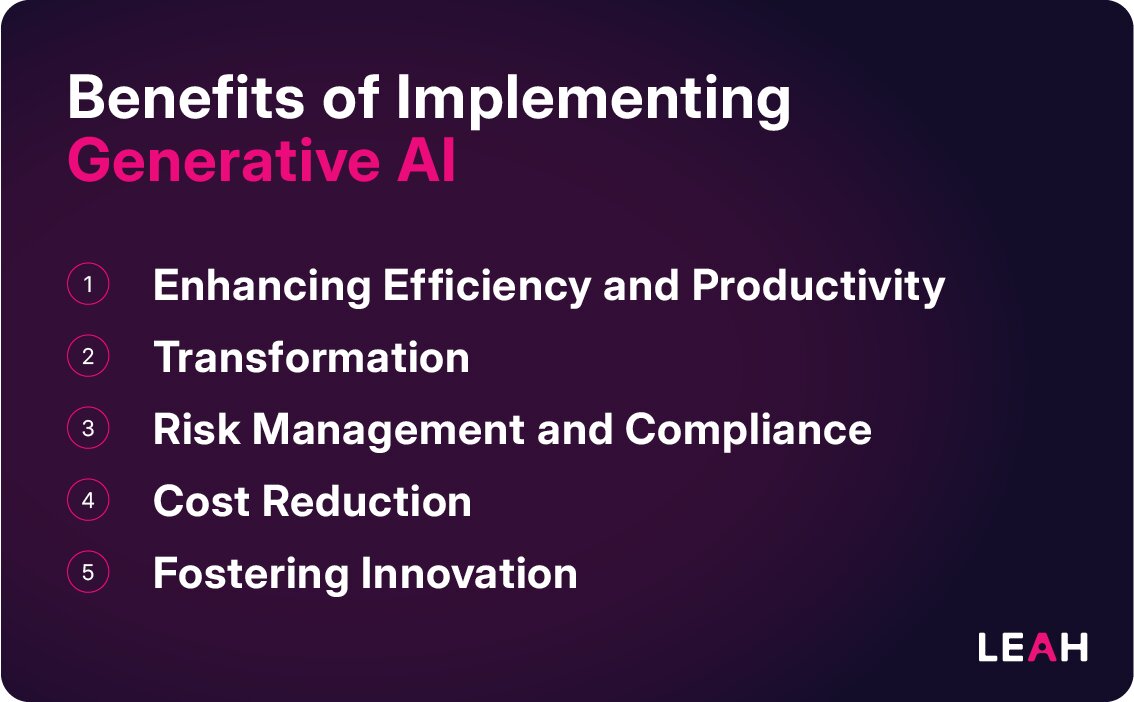
Implementing GenAI offers a multitude of benefits, primarily enhancing the ability to handle a greater volume of tasks. With AI assistance, legal professionals can significantly improve day-to-day productivity and efficiency. Routine tasks such as document reviews, generating first drafts, and conducting legal analysis can be automated, allowing legal teams to accomplish more in less time. The time saved can then be redirected towards working on other projects or dedicating additional time to existing ones. This not only boosts the overall output of the legal team but also ensures that their efforts are utilized strategically.
Furthermore, the integration of AI in legal workflows contributes to an elevation in the quality of work produced by legal professionals. By automating repetitive tasks, legal experts can devote more time and attention to critical aspects of their work, resulting in more thoughtful and thorough analysis. AI can also assist in the review, editing, and extraction of pertinent information from vast amounts of legal documents, ensuring a higher level of accuracy and reducing the likelihood of errors. The combination of human expertise and AI capabilities allows legal teams to deliver more precise and comprehensive legal services
Transformation
In addition to efficiency and improved quality, implementing AI in legal processes brings about a transformation in the role of legal professionals. The technology acts as a valuable resource, enabling legal experts to shift their focus from mundane and time-consuming tasks to more strategic and complex aspects of their work. This not only enhances job satisfaction but also empowers legal professionals to explore innovative solutions and contribute more substantively to the success of their organizations. Overall, the incorporation of AI in legal teams is a strategic move that not only streamlines operations but also positions legal professionals to excel in an evolving and dynamic legal landscape.
Risk Management and Compliance
If the contractual responsibilities of clients, suppliers, or your own business face mismanagement, it can emerge as a significant drain on costs. Ensuring that companies are neither overpaying nor underpaid is crucial. GenAI can extract clauses to integrate into automated tasks and key dates for tracking and management (such as renewals or price escalations). These tasks, dates, and tables within the system can be harnessed to monitor various types of contractual obligations.
Cost Reduction
Exploring the financial implications of incorporating GenAI technology into contract operations is vital. According to McKinsey & Company's findings, major corporations might encounter an estimated 2 percent loss due to unmet commitments. For a business with an annual expenditure of $2 billion, this translates to an accumulated annual loss of $40 million. Complicating this issue, teams without automated agreement methods are 75 percent more likely to overlook contractual obligations. Fortunately, these challenges are solvable as GenAI automates routine tasks, accelerates the time to obtain signatures, and enhances the management of contractual obligations.
Integrating GenAI into contractual procedures contributes to an enhanced bottom line by automating mundane tasks. This empowers employees to redirect their attention towards strategic initiatives, propelling the business forward instead of getting entangled in administrative chores. Furthermore, this heightened efficiency creates a less taxing experience for clients and vendors.
Fostering Innovation
Generative AI facilitates the creation of sophisticated legal documents, enhancing precision and coherence in legal writing. The technology's ability to analyze vast amounts of legal data and precedents empowers legal teams to make well-informed decisions, ultimately bolstering strategic planning and case management.
Key Components of Generative AI for Legal Teams
Large Language Models (LLM)
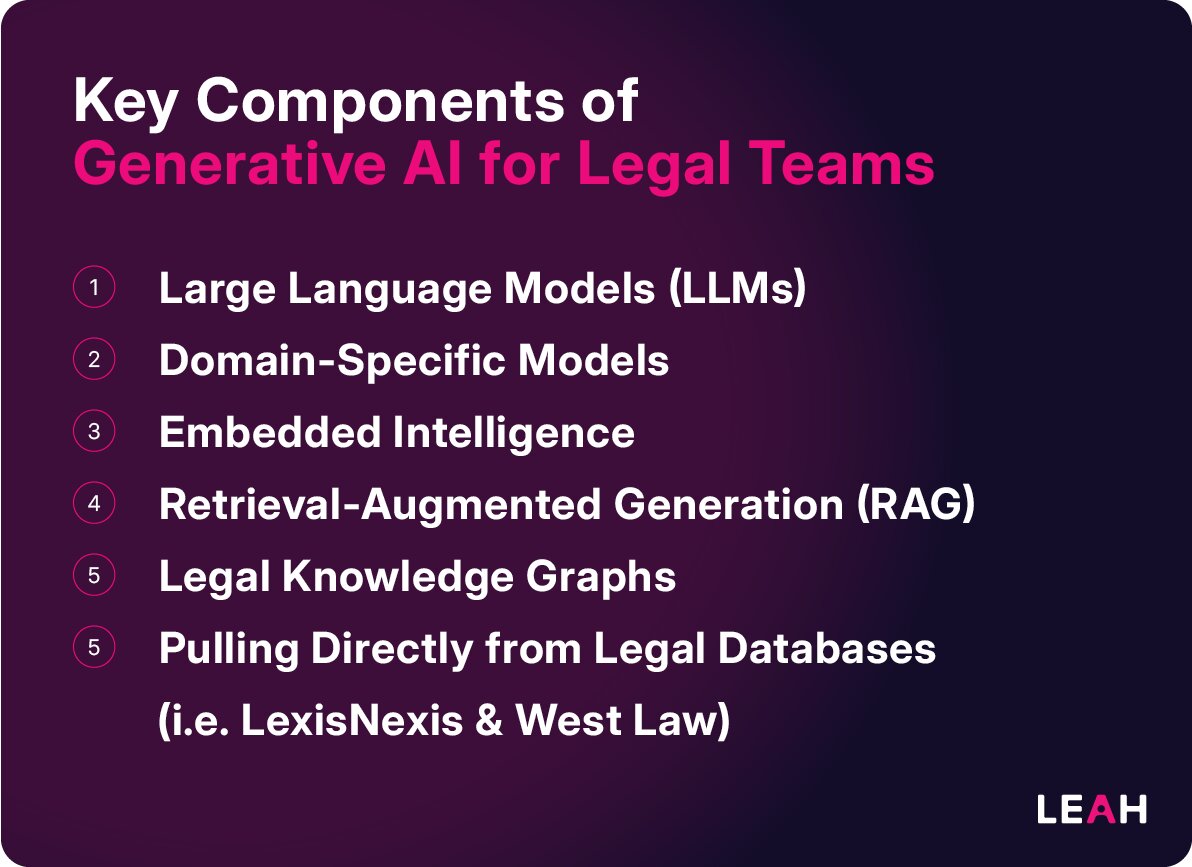
Large Language Models form the foundation of GenAI technology. These models, whether pre-trained (GPT-4, Anthropic) or open source (LLamA), have the remarkable ability to understand and generate human-like text. They excel in tasks involving the processing, analysis, and generation of various documents with exceptional precision. Their versatility extends to automating a wide range of tasks across different domains, making them indispensable in numerous applications.
Domain-Specific Models
Domain-specific models are tailored to a domain, in this instance legal. They are fine-tuned on legal texts and data to enhance their understanding of legal terminology, context, and nuances. These models ensure that GenAI is proficient in deciphering complex legal language, making it a powerful tool for lawyers, paralegals, and legal professionals.
Embedded Intelligence
Embedded custom models ensure that each legal task or use case leverages the right LLM capabilities, combined with fine-tuning for the domain (legal), the task, pre-engineered prompts for concise responses, and then rigorously tested.
Retrieval-Augmented Generation (RAG)
RAG is a cutting-edge technique that combines the strengths of retrieval and generation models. It allows GenAI to retrieve relevant legal information from vast databases and use that information to generate context-aware responses or documents. This approach significantly improves the accuracy and relevance of AI-generated content, a crucial aspect in the legal profession.
Legal Knowledge Graphs
Legal Knowledge Graphs are a vital resource for GenAI. They represent interconnected entities, relationships, and attributes within the realm of legal knowledge. These dynamic repositories help capture the intricate connections between legal entities, concepts, and principles. By efficiently storing and retrieving graph-structured data, legal knowledge graphs empower GenAI to provide more precise and context-aware insights and recommendations.
Pulling Directly from Legal Databases
A possibility for GenAI is to access and pull data directly from authoritative legal databases like LexisNexis and Westlaw. This feature ensures that the AI system has access to up-to-date and reliable legal information, enabling it to provide accurate and relevant guidance, research, and analysis.
Approaches to Choosing a GenAI Solution
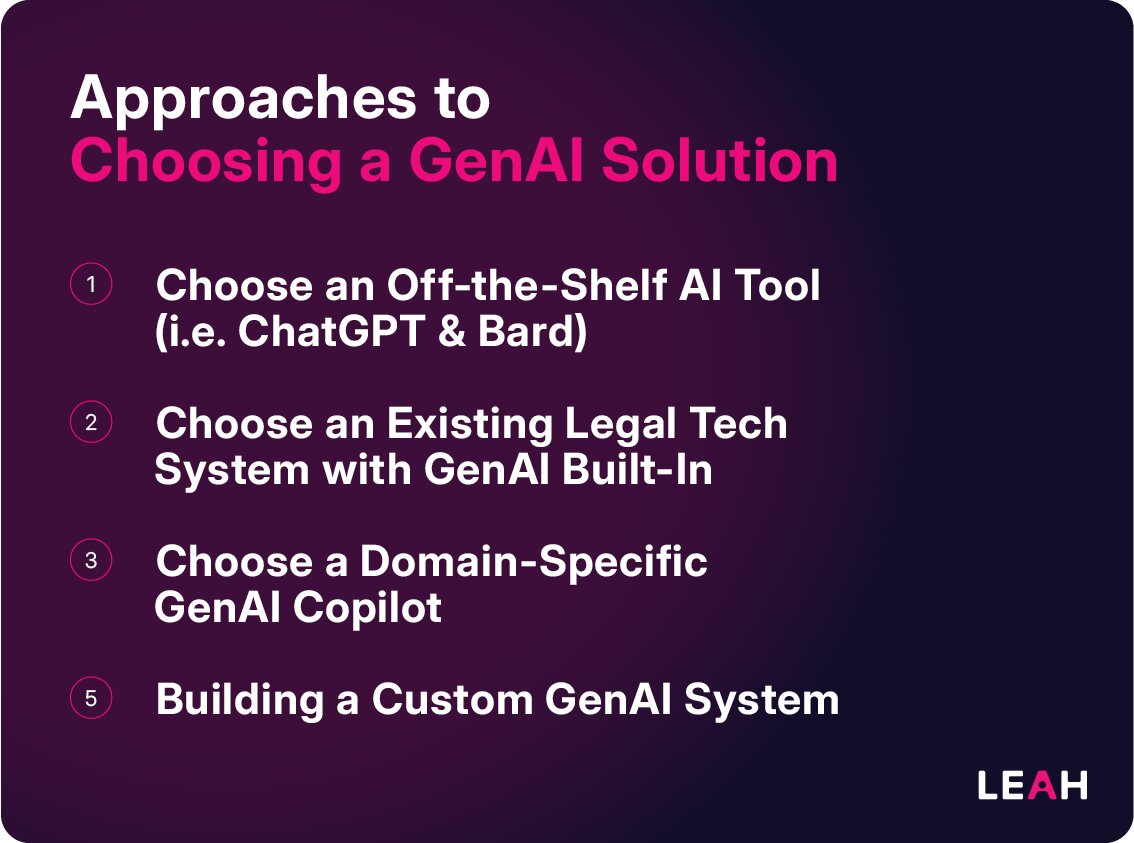
1. Choose an Off-the-Shelf AI Tool (i.e. ChatGPT and Bard)
Advantages:
- Easy to deploy
- Low cost
- Low effort for implementation
- Least disruptive option
Challenges:
- Low accuracy
- Not customizable
- The system may not comprehend complex situations within a specific industry
- The company has less control over data privacy and risk
2. Choose an Existing Legal Tech System with GenAI Built-In
A system with GenAI built-in can provide the best of both worlds. Many systems utilize a combination of AI and GenAI to provide an all-in-one solution.
Advantages:
- Enhanced contract analysis capabilities
- Improved decision-making through AI-driven insights
- Increased efficiency in contract management
Challenges:
- Potential for high initial costs
- Need for robust training to fully leverage GenAI features
- Necessity of ensuring data privacy and security compliance
Decision-makers should consider all critical factors and make objective decisions on a case-by-case basis, recognizing that these approaches are not mutually exclusive, and a combination may be suitable for most organizations.
Additionally, staying updated on emerging trends is essential to future-proof GenAI strategies in this rapidly evolving market, requiring regular strategy updates every few months.
3. Choose a Domain-Specific GenAI Copilot
Standalone GenAI copilots or assistants can be a great way to start using GenAI fast and effectively. Copilots and assistants offer user-friendly interfaces designed for legal tasks and use cases.
Advantages:
- Handles tasks like mergers and acquisitions, deal management, claims processing, and litigation support, and comes equipped with pre-built tools for tasks and use cases
- Some models can be tailored to each customer, driving conclusions, producing analyses, and generating documents aligned with the organization's specific standards
Challenges:
- Vendor Selection: Choosing a vendor with the right team, innovation, and market adaptability is crucial for the success of a domain-specific GenAI assistant
- Ethical Training: Ensuring the model is trained ethically and implementing effective guardrails to maintain ethical standards is a significant challenge in the development process
- Data Quality and Quantity: Obtaining sufficient and high-quality data for training the model, especially in niche domains, can be a challenging aspect of implementation
4. Build a Custom GenAI System
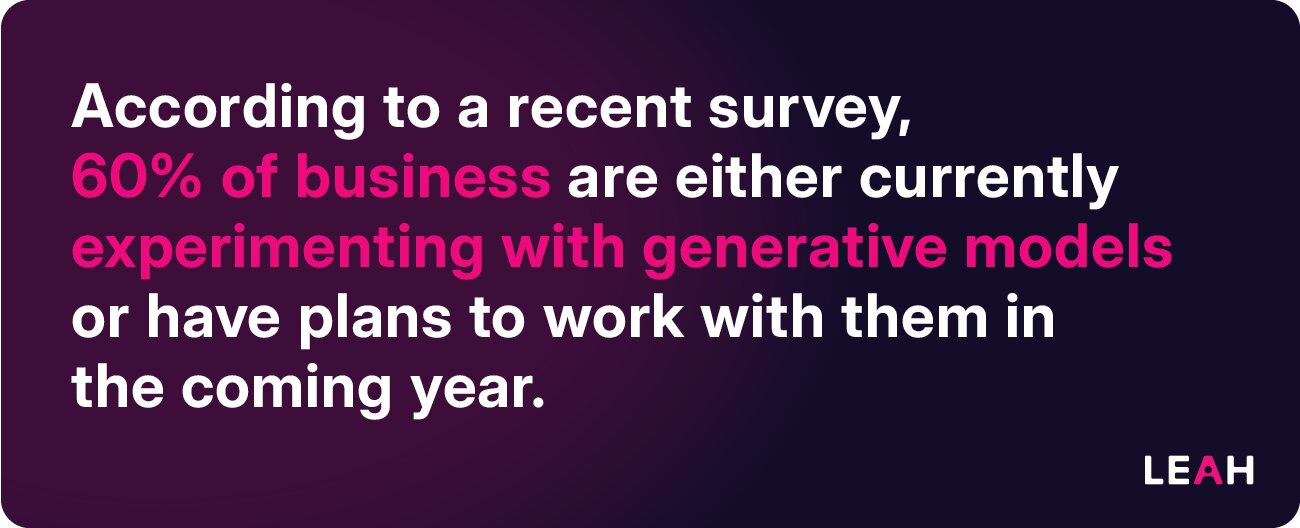
Organizations could construct their own foundational models from the ground up, tailoring them entirely to their specific data and business sectors. According to a recent survey, 60% of businesses are either currently experimenting with generative models or have plans to work with them in the coming year. Yet, only 21% have successfully deployed these models in production.
Advantages:
This approach ensures the model is completely customized to a specific domain and should ensure the greatest accuracy.
If the organization has proper data management in place, it can control the training data and parameters of how the GenAI is trained. This has the potential to significantly enhance the model's adaptability to various scenarios while minimizing the chances of bias or other unintended adverse consequences.
Challenges:
- High maintenance and high cost to the organization
- Keeping pace with rapidly evolving technology is challenging so staying competitive may be easier with tech vendors rather than an internal team
- By the year 2028, over half of the businesses that have independently developed their models from the ground up will discontinue these endeavors, primarily due to the financial burden, intricate nature, and technical challenges associated with their implementations
Use Cases of Generative AI in the Legal Domain
Draft Documents
- Summarizes regulatory updates for current industry legalities
- Drafts contracts and memos tailored to legal needs
- Creates customized documents to match legal requirements
- Ensures ongoing compliance within the legal framework
Extract Data
- Precise extraction of valuable data from legal documents
- Extract essential details like clauses, dates, and involved parties
- Eliminates the need for manual data extraction, saving valuable time and effort in the legal process
- Efficiently analyze and utilize the extracted information
Discovery
- In-depth analysis and insights across various legal documents relevant to corporate law, including M&A, Contracts, and Policies
- Comprehensively examines each line agreement
- Answers detailed questions from users for refined analysis and explanations
AI – Powered Legal Help Desk
- Simplifies the process of obtaining answers to legal questions
- Allows users to ask questions in natural conversational language
- Provides quick and accurate responses
Redline Documents
- Provides redlining recommendations
- Provides risk and remediation analysis reports
Create Playbooks
- Automates customized playbook creation from existing documents
- Elevates playbook management
Litigation
- Processes large volumes of litigation claims
- Eliminates scattered information and delays, centralizing knowledge for optimal outcomes
- Makes swift decisions, aligns responses with precedents, and enhances defense or action efficiency
Mergers and Acquisition
- Streamlines M&A workflows by optimizing, planning, & accelerating financial analysis
- Provides actionable recommendations
- Proactively identifies risks, saves time, and gives a comprehensive view of obligations
Ethical Implications and Considerations
The deployment of artificial intelligence raises concerns about the potential erosion of human decision-making and the ethical responsibility tied to legal processes. Striking the right balance between efficiency gains and the ethical treatment of sensitive legal matters is crucial.
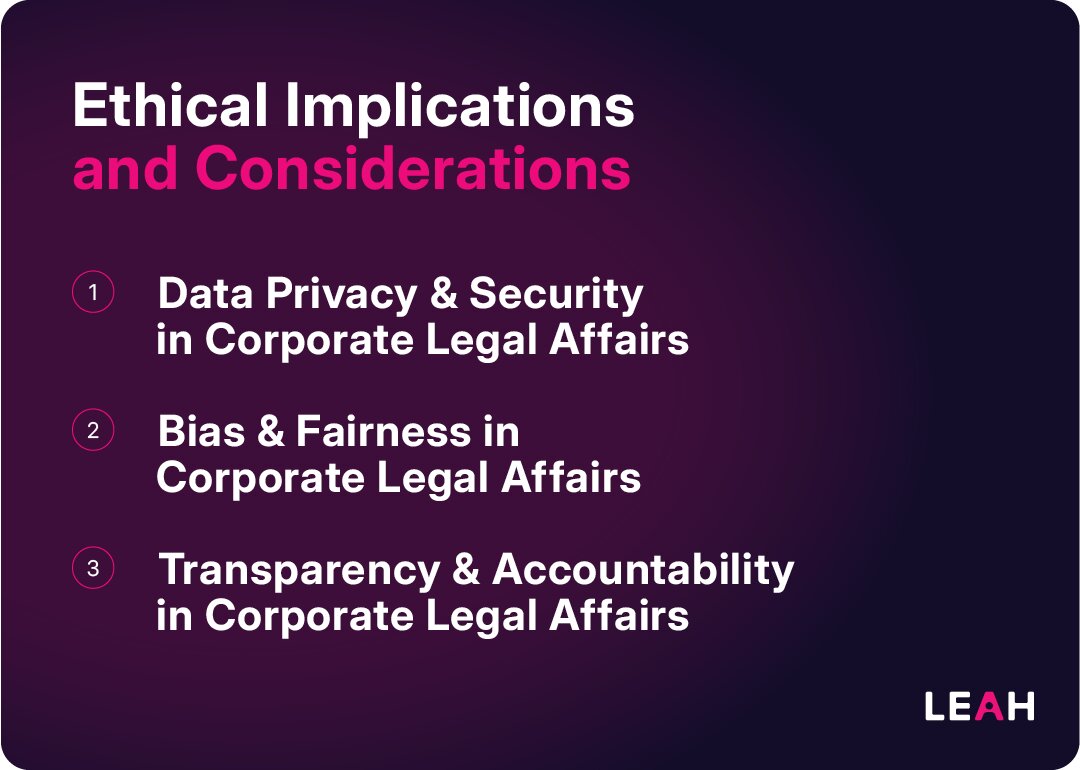
The ethical implications span various aspects, such as data privacy, fairness, transparency, and accountability. Legal professionals must navigate these complexities to ensure that the introduction of GenAI aligns with ethical standards and preserves the integrity of the legal system.
Data Privacy and Security in Corporate Legal Affairs
The integration of AI in the legal industry, particularly in corporate legal affairs, raises ethical concerns regarding data privacy and security. AI systems often rely on vast amounts of sensitive information to function effectively, leading to potential risks of unauthorized access and misuse. Legal professionals must grapple with the challenge of safeguarding confidential client data and ensuring compliance with privacy regulations. Striking a balance between leveraging AI's capabilities and upholding the strict standards of confidentiality and security becomes crucial to maintaining trust in the legal system.
Bias and Fairness in Corporate Legal Affairs
The ethical implications of AI in corporate legal affairs extend to concerns about bias and fairness. AI algorithms may inadvertently inherit biases present in the data used for their training, potentially perpetuating or even exacerbating existing disparities in the legal system. Identifying and mitigating bias in AI decision-making processes becomes imperative to ensure fair and equitable outcomes. Legal professionals must actively engage in addressing these issues by implementing transparency measures, regular audits, and continuous refinement of AI models to promote fairness and uphold the principles of justice in the legal landscape.
Transparency and Accountability in Corporate Legal Affairs
Maintaining transparency and accountability in the use of GenAI within corporate legal departments is essential for upholding ethical standards. Clear communication about the role of AI in legal decision-making processes is crucial to building trust with clients, employees, and the broader legal community. Moreover, establishing mechanisms for accountability in case of erroneous AI-driven decisions is essential.
Corporate legal departments must have clear policies in place for auditing, explaining AI decisions, and rectifying any errors promptly. Striking the right balance between automation and human oversight ensures that legal processes remain accountable and transparent, reinforcing the integrity of the legal profession.
Defining Goals and Establishing Measurable Criteria
To ensure the successful deployment of GenAI, it is advisable to adopt a systematic approach, commencing with the alignment of processes across the entire enterprise. Following the establishment of a solid foundation for AI technology within the company's digital transformation, it is crucial to meticulously identify key objectives and devise quantifiable outcomes. This involves projecting achievable results over the next 6, 12, and even 24 months. Subsequently, employ metrics for success and failure against a predetermined benchmark and communicate these findings to the organization. Finally, assimilate insights from the technology assessment, making necessary adjustments at each stage of development.
Undoubtedly, we are at the nascent stage of generative artificial intelligence. As digital technology rapidly evolves, reshaping roles and enhancing performance across various functions, senior leadership must formulate a more sophisticated technology strategy. This becomes particularly imperative with the proliferation of domain- and customer-specific use cases that are becoming increasingly intricate. An example is the analysis of documents, such as legal ones, containing sensitive information. Extracting pertinent details and generating obligation reports necessitates a combination of top-tier Language Model Models (LLMs) and collaborative intelligence. Establishing clear objectives and measuring outcomes, as previously discussed, is paramount in such scenarios.
Nevertheless, leaders must not overlook potential challenges associated with GenAI and should actively manage inherent risks. Furthermore, a comprehensive reassessment of core business processes is essential, accompanied by the identification of new workforce skills and capabilities.
Case Studies: Success Stories and Lessons Learned
PwC's Legal Business Solutions practice, in collaboration with technology alliance partner Leah, is spearheading Project Skynet—a groundbreaking Generative Artificial Intelligence initiative. This project marks PwC's inaugural foray into the legal applications of Generative AI, demonstrating its commitment to ushering in cutting-edge technology into clients' legal departments. By leveraging Leah Legal, Project Skynet aims to revolutionize content creation processes, reduce costs, and enhance overall production and profitability for its clients.
Success Story
Project Skynet's success story revolves around addressing challenges faced by a global venture capital firm in gathering crucial data from investment agreements. Manual extraction of key contractual terms proved time-consuming and costly. To overcome this, PwC, in collaboration with technology ally Leah, implemented Leah Legal—a Generative AI application. The technology's capability to automatically extract complex qualitative data inputs and contractual terms significantly streamlined the client's financial reporting and strategic business analysis processes.
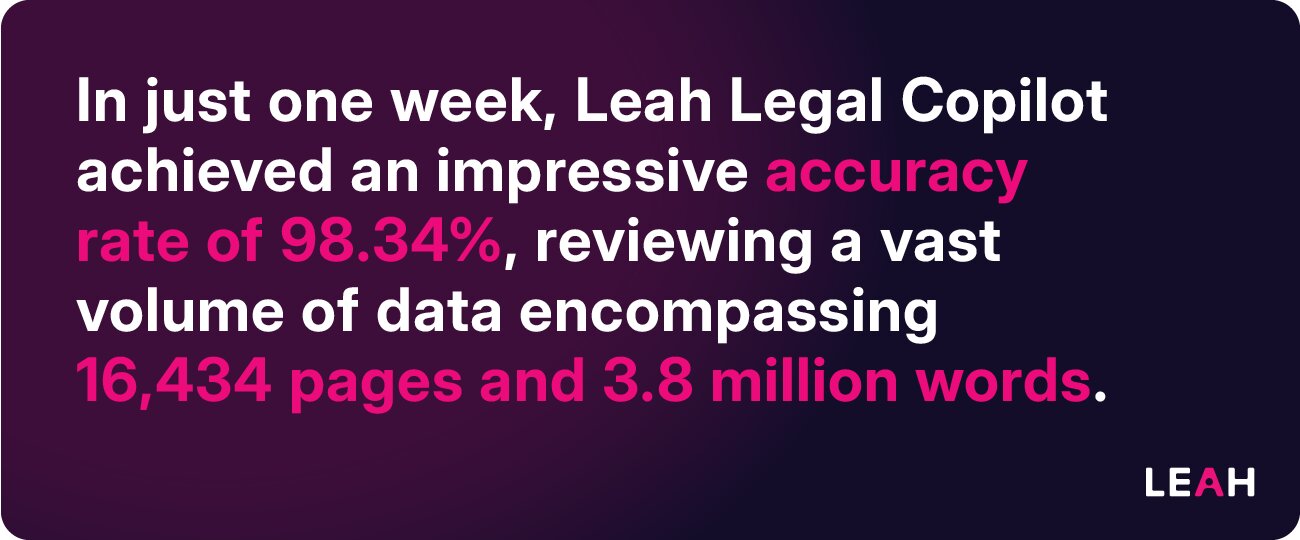
In just one week, Leah Legal achieved an impressive accuracy rate of 98.34%, reviewing a vast volume of data encompassing 16,434 pages and 3.8 million words. This success showcases the potential for Generative AI to revolutionize data extraction and analysis, providing tangible benefits for businesses.
Lessons Learned and Future Opportunities
The Project Skynet case study provides valuable lessons for organizations considering the integration of Generative AI into their processes. It emphasizes the importance of carefully assessing the costs, benefits, and trade-offs associated with adopting this advanced technology. Project Skynet envisions a future state where clients can automatically draw insightful conclusions about their investments through efficient AI analysis.
The study underscores the need for collaboration between legal and technology experts, showcasing how PwC, PwC US, PwC UK, and Leah worked together seamlessly. As businesses explore the potential of Generative AI, the Project Skynet case study offers insights into overcoming challenges and maximizing the benefits of this cutting-edge technology in the legal domain.
Global Perspectives: Adoption Trends Around the World
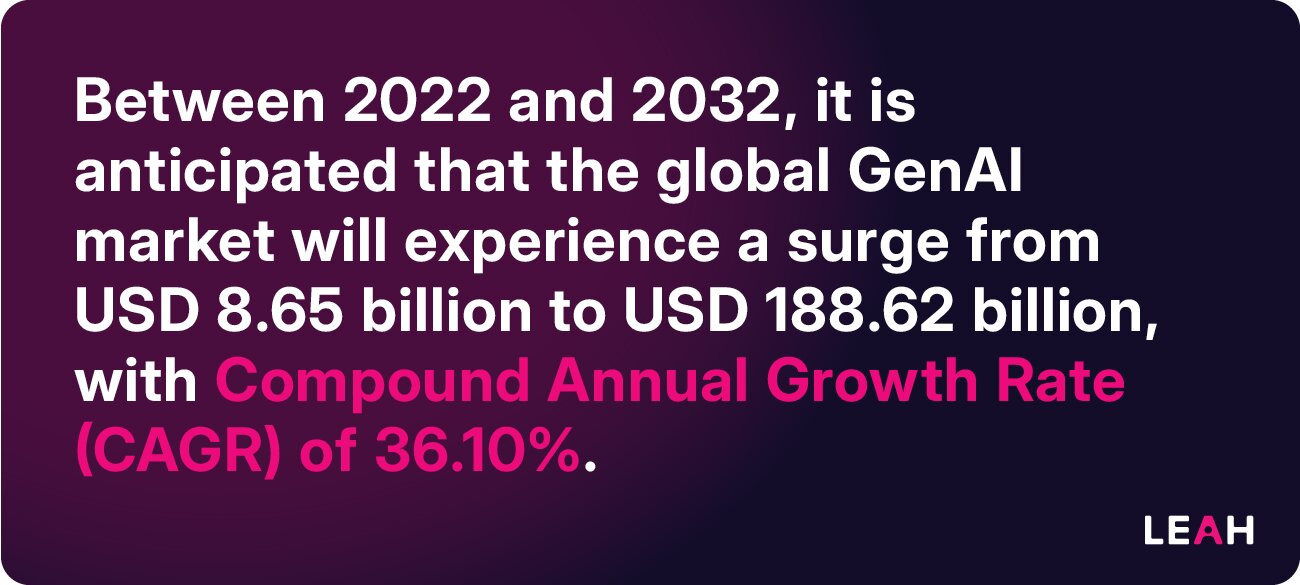
The trajectory of artificial intelligence adoption is not only influenced by technological advancements but also shaped by the intricate interplay of cultural, regulatory, and economic factors. Between 2022 and 2032, it is anticipated that the global GenAI market will experience a surge from USD 8.65 billion to USD 188.62 billion, with a Compound Annual Growth Rate (CAGR) of 36.10%. The largest market share in 2022 was retained by the North American region.
Future Trends: What Lies Ahead?
According to Gartner, more than 80% of enterprises are projected to have utilized Generative AI APIs or deployed Generative AI-enabled applications by 2026. Arun Chandrasekaran, Distinguished VP Analyst at Gartner, affirms, "Generative AI has emerged as a top priority for the C-suite, sparking significant innovation in new tools beyond foundation models. Demand for generative AI is on the rise across diverse industries, including healthcare, life sciences, legal, financial services, and the public sector."
Public Sentiment Around AI
Despite concerns regarding the use of AI, most consumers continue to place their trust in businesses that incorporate AI technology (Forbes Advisor). This suggests that when companies responsibly and transparently implement AI, they not only maintain the trust of their customers but also harness the capabilities of AI to improve overall customer experiences.
Conclusion
Generative AI is not merely a technological advancement; it represents a paradigm shift in how legal professionals approach their work, fostering a culture of innovation and excellence in the legal field.
As legal operations continue to evolve, the successful integration of Generative AI stands as a testament to the symbiotic relationship between human expertise and technological prowess, creating a future where legal professionals are empowered to navigate complexities with unprecedented efficiency and foresight.
Generative AI for Legal – Key Takeaways:
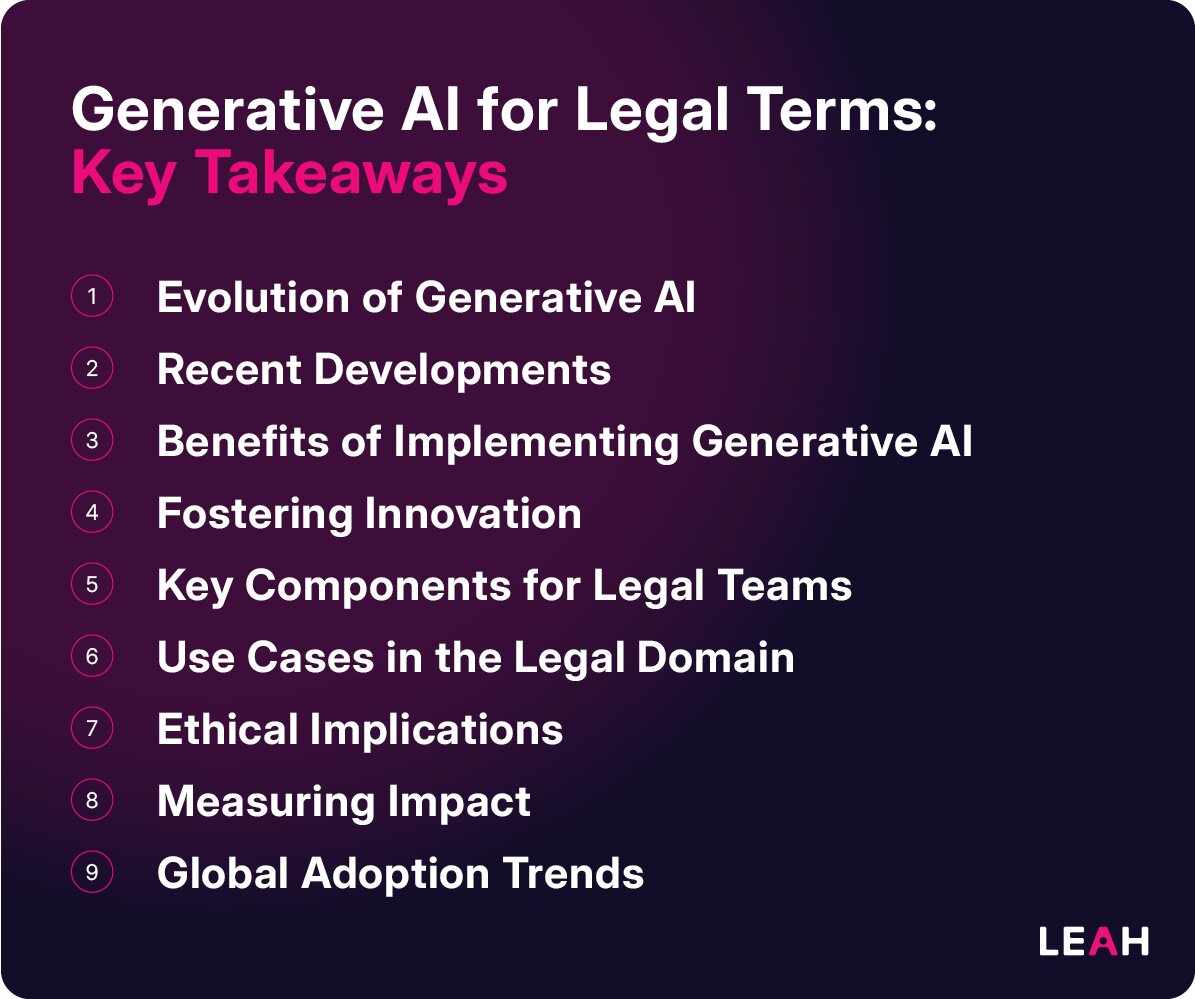
Evolution of Generative AI
- Historical journey from basic automation to complex generative capabilities
- Integration of natural language processing (NLP) and advancements in deep learning
- Emergence of generative models for document creation, contract analysis, and predicting case outcomes
Recent Developments
- Transformative developments in the legal domain powered by deep learning and neural networks
- Enhanced document generation, contract analysis, and legal writing assistance
- Multimodal capabilities for analyzing audio, video, and image data relevant to legal cases
Benefits of Implementing Generative AI
- Significant efficiency and productivity boost with reduced contract signing delays
- Automation streamlines processes, identifies inefficiencies, and optimizes workflows
- Improved risk management, compliance monitoring, and substantial cost reduction
Fostering Innovation
- Facilitates the creation of sophisticated legal documents, enhancing precision and coherence
- Analyzes vast legal data for well-informed decisions, bolstering strategic planning and case management
- Cultivates an environment where innovation becomes a driving force in the legal field
Key Components for Legal Teams
- Natural Language Processing (NLP) for understanding complex language documents
- Machine Learning (ML) and Predictive Analytics for self-learning AI models
- Legal Knowledge Graphs for efficient storage and retrieval of graph-structured legal data
- Integration with legal databases
Use Cases in Legal Domain
- Contract analysis and generation
- Playbook creation for legal scenarios
- Litigation support for case preparation
- Legal research through extensive databases
- Compliance monitoring for regulatory changes
Ethical Implications
- Prioritize data privacy and security in corporate legal affairs
- Mitigate bias and ensure fairness in decision-making processes
- Emphasize transparency and accountability for trustworthy legal environments
Measuring Impact
- Define clear goals and measurable criteria for GenAI deployment
- Regularly assess outcomes against predetermined benchmarks
- Acknowledge potential challenges and actively manage risks
Global Adoption Trends
- Anticipated surge in the global GenAI market from USD 8.65 billion to USD 188.62 billion by 2032
- Over 80% of enterprises are projected to use Generative AI APIs or applications by 2026
- Continued public trust in companies responsibly implementing AI for improved customer experiences.
Frequently Asked Questions (FAQs)
What are the primary considerations before implementing Generative AI in a legal team?
Before implementing Generative AI in a legal team, several primary considerations should be taken into account. These include:
- Legal and Regulatory Compliance: Ensure that the use of Generative AI complies with relevant laws and regulations, especially those related to data privacy and confidentiality
- Data Security: Evaluate the security measures in place to protect sensitive legal information. Implement robust encryption and access controls to prevent unauthorized access
- Accuracy and Reliability: Assess the accuracy and reliability of the Generative AI model, as errors in legal contexts can have significant consequences. Conduct thorough testing and validation before deployment
- Interpretability and Explainability: Choose Generative AI models that are interpretable and provide explanations for their decisions. This is crucial in legal settings where transparency is important.
- Human Oversight: Implement mechanisms for human oversight to review and verify the output of Generative AI. Legal professionals should have the final say in decisions to ensure accountability
- Bias and Fairness: Address potential biases in the training data that could lead to biased outcomes. Regularly monitor and mitigate bias in the AI system to ensure fairness in legal processes
- Training Data Quality: Ensure that the training data used to develop Generative AI models is of high quality and representative of diverse legal scenarios
How can Generative AI be integrated with existing legal processes?
Integrating Generative AI with existing legal technologies involves the following steps:
- Assessment of Compatibility: Evaluate the compatibility of Generative AI with the current legal technology stack. Identify potential integration points and assess any necessary modifications.
- API Integration: Many Generative AI models offer application programming interfaces (APIs) that allow seamless integration with other software. Integrate these APIs with existing legal software solutions.
- Data Flow and Connectivity: Establish a clear data flow between existing legal systems and Generative AI. Ensure that data can be transferred securely and efficiently.
- User Training: Provide training to legal professionals on how to interact with and interpret the output of Generative AI. Foster a collaborative environment where AI is seen as a tool to enhance human decision-making.
- Feedback Mechanisms: Implement feedback mechanisms to continuously improve the performance of Generative AI. Solicit input from legal professionals to refine the system over time.
What are the ethical considerations when using Generative AI in legal processes?
Ethical considerations in using Generative AI in legal processes include:
- Transparency: Ensure transparency in the use of Generative AI, providing clear information on how it operates and makes decisions.
- Fairness and Bias: Mitigate biases in training data and regularly assess the AI system for fairness to avoid discriminatory outcomes.
- Privacy: Safeguard the privacy of sensitive legal information and adhere to data protection regulations. Implement robust security measures to prevent unauthorized access.
- Accountability: Establish clear lines of accountability for decisions made by Generative AI. Hold individuals responsible for the system's outputs and provide avenues for recourse in case of errors.
- Human Oversight: Maintain human oversight in critical legal decisions. Generative AI should augment human decision-making rather than replace it entirely.
- Informed Consent: When applicable, ensure that individuals involved in legal processes are informed about the use of Generative AI and provide their consent.
How can legal teams stay updated with the rapidly evolving field of Generative AI?
Staying updated with Generative AI developments involves the following:
- Continuous Learning: Encourage legal professionals to engage in continuous learning and stay informed about advancements in Generative AI through workshops, webinars, and training programs.
- Professional Associations: Join and participate in professional associations related to AI and law. These organizations often provide resources, events, and networking opportunities.
- Collaboration with Tech Experts: Foster collaboration between legal and technology experts within the organization. Regular communication ensures that legal teams are aware of the latest developments in Generative AI.
- Industry Conferences and Seminars: Attend conferences, seminars, and webinars focused on AI in the legal domain. These events provide insights into emerging trends and allow networking with experts in the field.
- Subscribe to Journals and Publications: Subscribe to legal tech journals, publications, and online platforms that regularly publish articles on the intersection of law and AI. This helps in staying abreast of academic and practical developments.
- Engage with AI Vendors: Maintain a relationship with Generative AI vendors. Vendors often provide updates, training sessions, and support to their clients
Unlock the Future of Legal with GenAI
Discover how General Artificial Intelligence can transform your legal team’s efficiency and productivity. Get actionable insights, strategic tips, and a framework for implementing GenAI in your legal workflows with our comprehensive guide. Download Your Free Guide