
Published: November 3, 2022
Updated: June 10, 2025
Let's be honest—managing contracts with shared drives and email folders just doesn't cut it anymore. If you're still doing that, you're probably spending way too much time hunting down the right version of agreements and wondering if you missed an important deadline.
As someone who's seen legal teams struggle with outdated processes, I can tell you that modern contract management software isn't just about storing documents. It's become the backbone of how smart organizations handle their agreements, reduce risk, and actually turn their contracts into valuable business intelligence.
But here's the thing: with so many options out there, it's tough to know which features actually matter. I've put together this guide to help you cut through the noise and focus on the 20 most essential contract management software features that will genuinely make a difference for your team in 2025.
- Centralized Contract Repository
- Search That Actually Works
- Security and Access Controls
- Template Management
- Automated Contract Generation
- Workflow Automation
- Digital Redlining and Version Comparison
- Counterparty Collaboration
- Electronic Signature Integration
- AI Contract Review and Analysis
- Natural Language Processing
- Obligation Management
- Renewal Management
- Compliance Monitoring
- Reporting and Analytics
- Integration with Modern Enterprise Systems
- Mobile Accessibility
- Implementation and Usability
- AI-Powered Contract Intelligence
- Enterprise-Grade Scalability
The 20 Features That Actually Matter
1. Centralized Data Repository
This might sound basic, but you'd be surprised how many organizations still don't have this nailed down. We're talking about more than just a fancy filing cabinet—you need a single source of truth where everyone can find what they need.
What you should look for: cloud-based access (because who works from just one location anymore?), smart organization that makes sense for your business, complete version control, and an audit trail that shows who did what and when.
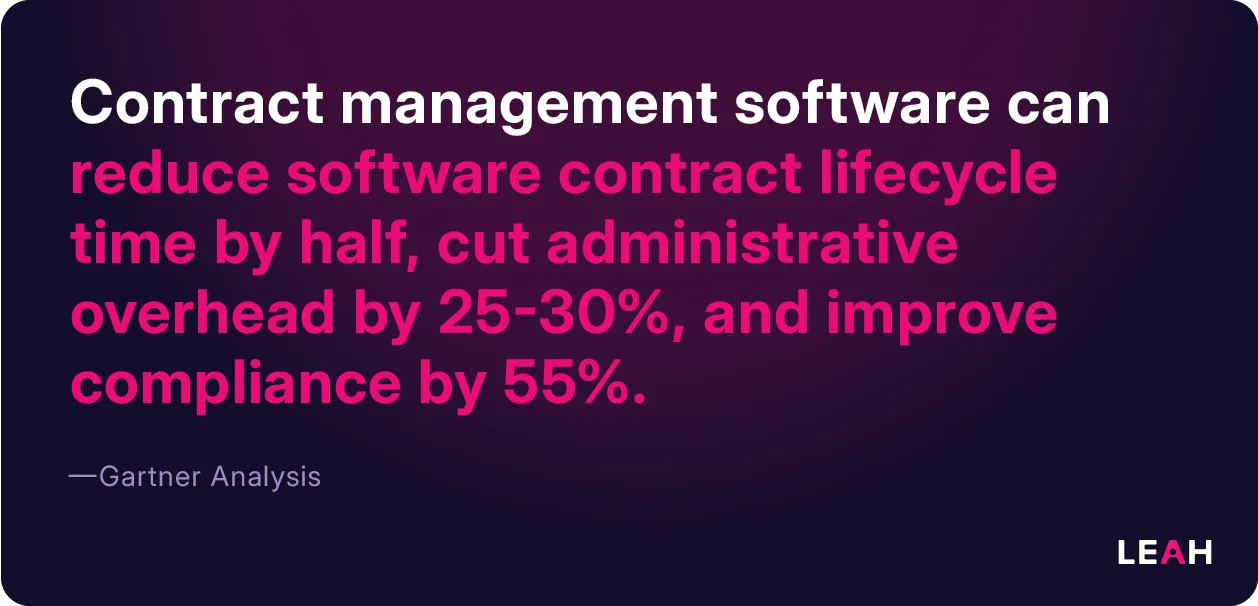
Here's a reality check: teams without centralized repositories waste over 9 hours per week just looking for stuff. That's more than a full workday! Research shows that good contract management software can significantly reduce contract lifecycle time and administrative overhead.
2. Search That Actually Works
Ever tried finding a specific clause in a 50-page agreement? Or needed to pull up all contracts with a particular vendor? If your search functionality is basically "Ctrl+F but fancier," you're in for a lot of frustration.
Look for systems that can handle complex searches, understand what you're actually looking for (not just keyword matching), and let you save searches you use frequently. The best systems understand context—they know that "termination" in an employment contract is different from "termination" in a software license.
3. Security That Won't Keep You Up at Night
Your contracts probably contain sensitive information—pricing, strategic plans, personal data. You need security that goes beyond a simple password.
Essential features include role-based permissions (not everyone needs to see everything), encryption that protects your data whether it's sitting on servers or being transmitted, and compliance with regulations like GDPR and HIPAA. Remember, you're not just protecting against hackers—you also need to control who inside your organization can access what.
4. Template Management That Prevents Chaos
Templates are your friend, but only if they're done right. You want pre-approved language that reduces risk while still giving people the flexibility to handle different situations.
The sweet spot is systems that let business users create contracts from approved templates without bothering legal for every small variation, while still maintaining oversight on important changes.
OneDPA, for example, is a document template sponsored by Leah. It reduces the time and money spent on reviewing and finalizing data processing agreements (DPAs). And it can be produced through Leah Cloud’s convenient web-based tool: the oneDPA Generator.
5. Automated Contract Generation
This is where things get exciting. Instead of starting from scratch every time, good automation can create new agreements based on simple business inputs.
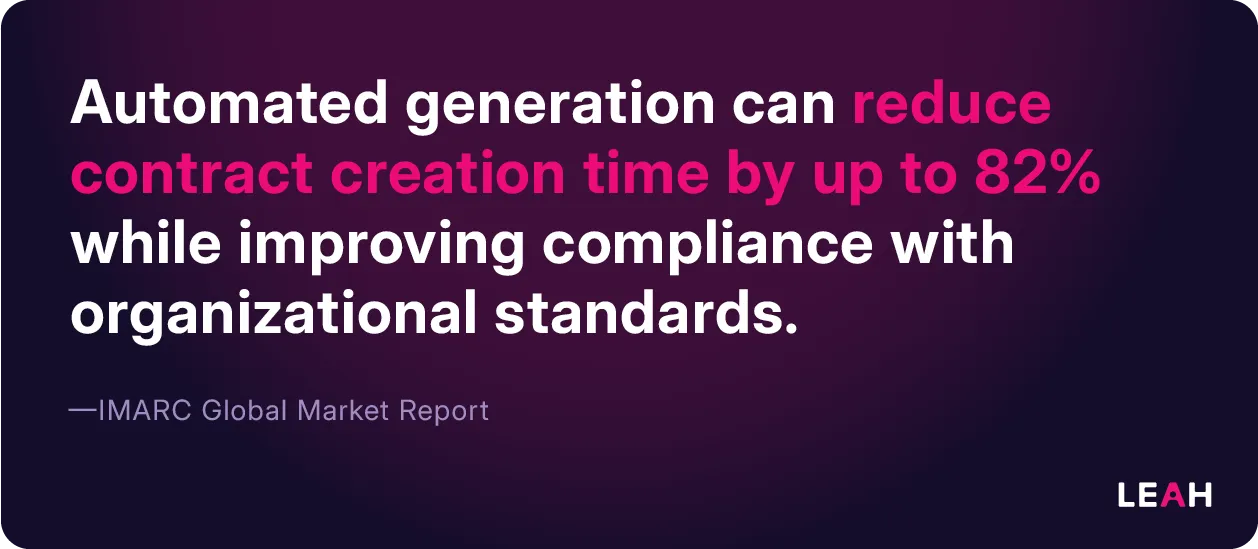
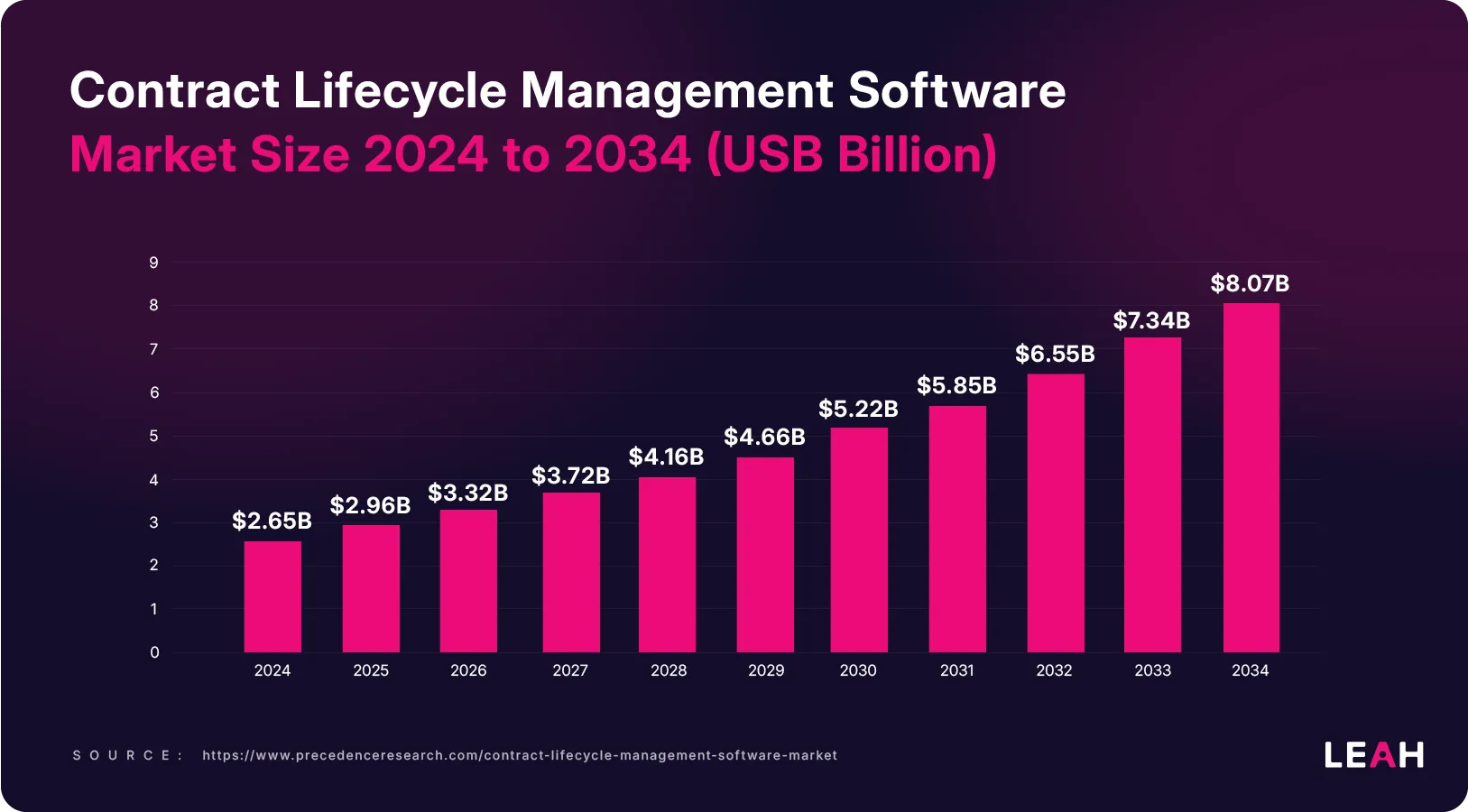
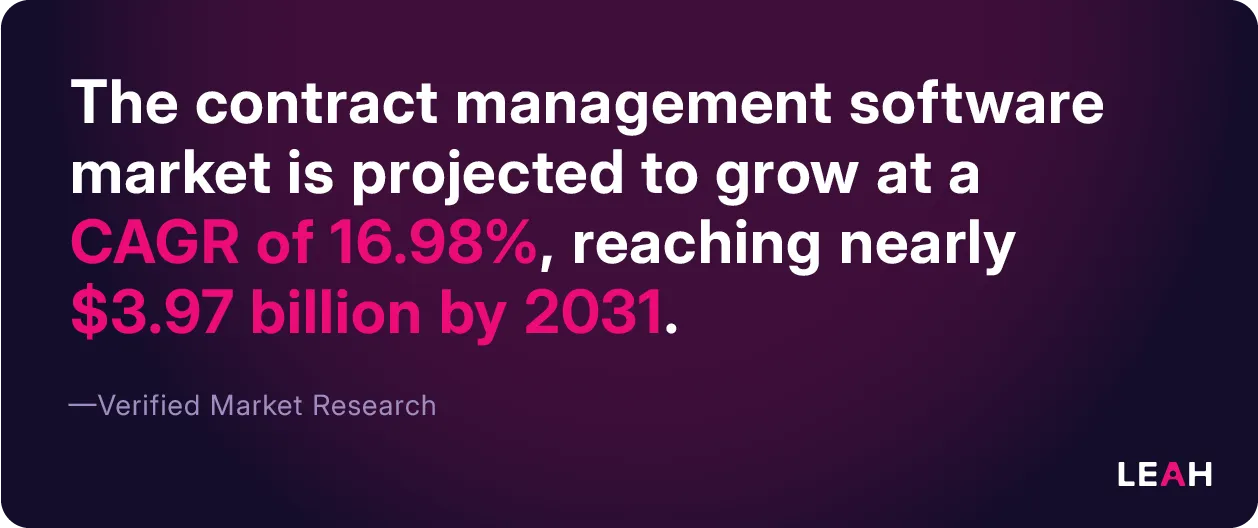
When done well, this can reduce contract creation time by up to 82%. The contract management software market is experiencing steady growth driven by organizations seeking to streamline contract-related tasks and enhance productivity—that's the difference between closing deals this quarter versus next quarter.
6. Workflow Automation That Actually Flows
Manual contract routing is where deals go to die. You need workflows that automatically move contracts through the right approval steps without requiring constant babysitting.
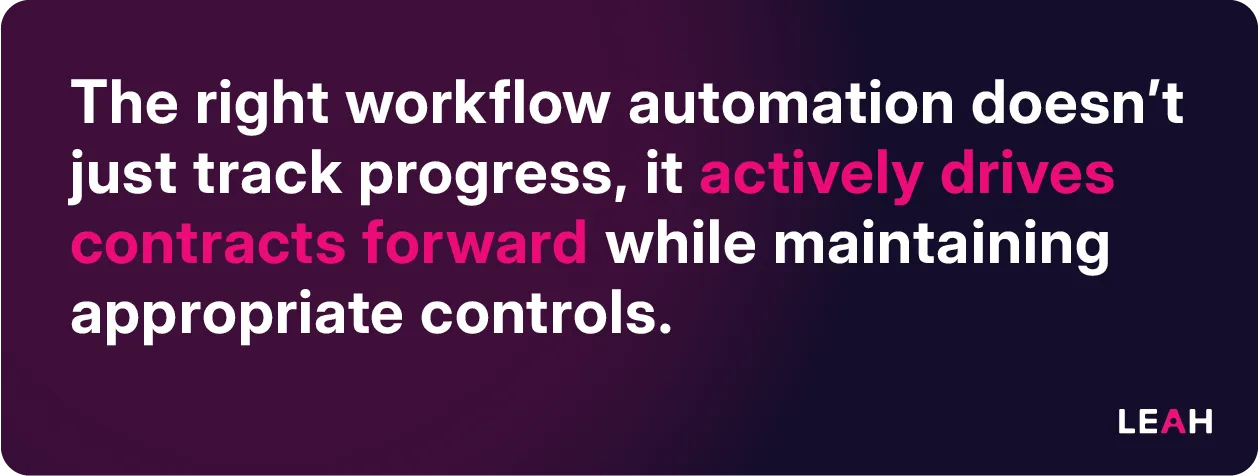
Look for systems that can handle complex approval chains, track SLAs so you know when things are getting stuck, and automatically assign tasks to the right people. The goal is to keep contracts moving forward while maintaining appropriate controls.
7. Redlining and Version Control That Makes Sense
Contract negotiation shouldn't feel like deciphering hieroglyphics. You need tools that clearly show what changed, who changed it, and make it easy to compare different versions.
The best systems turn negotiation from a confusing email chain into a structured process where everyone can see what's happening.
8. Counterparty Collaboration Without the Headaches
Your external partners shouldn't need to buy licenses to your software just to negotiate with you. Look for secure portals that make it easy for counterparties to review, comment, and negotiate without creating friction.
9. E-Signature Integration That Just Works
Physical signatures are so 2019. You need e-signature capabilities that handle complex signing workflows, work on mobile devices, and comply with e-signature laws across different jurisdictions.
The key is integration—you don't want to be bouncing between different systems just to get a signature.
10. AI That Actually Helps (Not Just Hype)
AI in contract management has moved beyond marketing buzzwords. Modern systems can automatically identify risks based on your specific policies, extract key obligations, and flag unusual clauses.
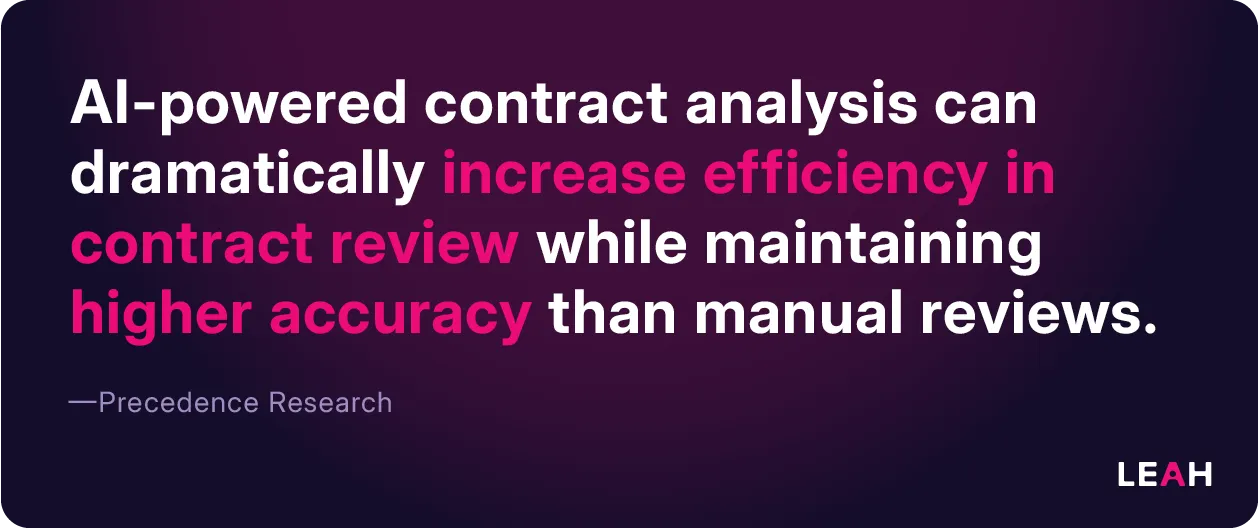
A recent study by Precedence Research revealed that AI-powered contract analysis can dramatically increase efficiency in contract review processes while maintaining higher accuracy than manual reviews.
The best AI systems learn from your organization's preferences and get better over time. They're not trying to replace lawyers—they're trying to handle the routine stuff so lawyers can focus on strategy.
11. Natural Language Processing for Real Understanding
This is AI's smarter cousin. NLP doesn't just find keywords—it understands what contract language actually means. It can summarize complex agreements, identify unusual provisions, and even help with translation for international deals.
12. Obligation Management That Prevents Surprises
Here's where many organizations fall down: they sign the contract and then… forget about it until something goes wrong. Good obligation management tracks milestones, sends proactive reminders, and makes sure everyone knows what they're supposed to do and when.
13. Renewal Management That Saves Money
Organizations without solid renewal management typically overspend by 25-35% because they miss termination windows or get stuck with unfavorable auto-renewals. You need early warnings, automated review processes, and easy access to historical data to inform your renewal strategy.
14. Compliance Monitoring That Stays Current
Regulations change constantly. Your contract management system should help you stay ahead of these changes, not just react to them after you're already in trouble.
15. Reporting and Analytics That Drive Decisions
Your contracts contain valuable business intelligence. The right analytics can show you vendor performance trends, identify cost-saving opportunities, and help you make better strategic decisions.
16. Integration with Your Other Systems
Contracts don't exist in a vacuum. Essential integration capabilities include CRM connectivity to align contracts with customer relationships, ERP synchronization for financial implications, document management system integration, procurement platform connections, and robust API availability for custom integrations. The value multiplies when your contract data flows seamlessly between systems.
17. Mobile Access for the Real World
Today's professionals need access to contract information wherever they work. People need to review and approve contracts from airports, coffee shops, and home offices. Mobile access isn't just convenient—it's essential for keeping deals moving.
18. Usability That Doesn't Require a PhD
The most powerful features are worthless if people won't use them. Look for intuitive interfaces, guided workflows, and systems that require minimal training.
19. AI-Powered Contract Intelligence
The latest generation of AI assistants go beyond basic analysis to provide actionable insights, risk assessments tailored to your organization, and recommendations for improvement.
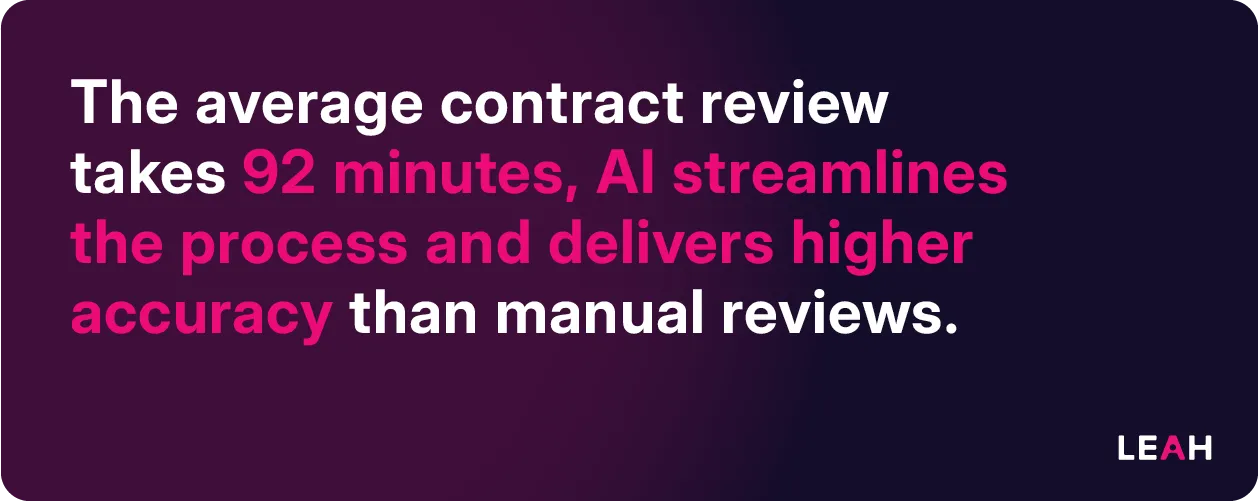
Research shows that the average contract review takes approximately 92 minutes, but AI can streamline this process significantly while maintaining higher accuracy than manual reviews.
20. Scalability for Growth
Your contract management solution needs to grow with you. That means handling increasing volumes while maintaining performance, supporting multiple languages and jurisdictions, and adapting to your changing needs.
Making the Right Choice
Here's the truth: not all contract management platforms are created equal. The best solutions integrate these features into a cohesive system rather than offering them as disconnected tools.
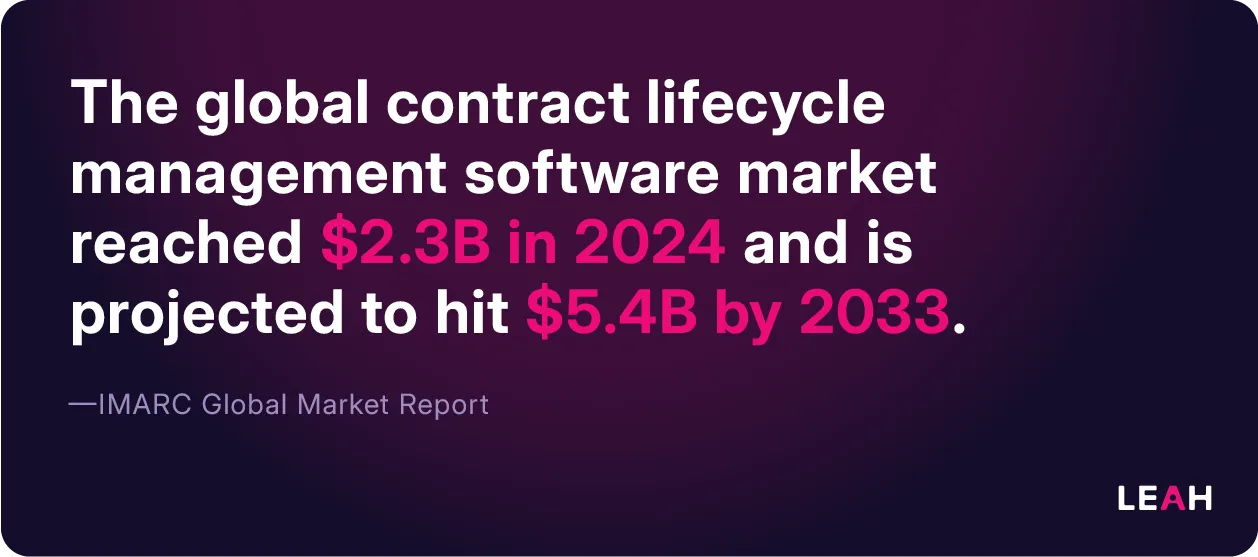
Organizations using contract management solutions see significant ROI, and the market is experiencing robust growth. According to IMARC Group, the global contract lifecycle management software market reached $2.3 billion in 2024 and is expected to reach $5.4 billion by 2033, exhibiting a growth rate of 9.7%—which tells you that more and more businesses are recognizing this as a strategic investment, not just a nice-to-have.
When you're evaluating options, ask yourself:
- Will this actually solve our biggest pain points?
- Can our team realistically adopt and use this?
- Will it grow with us as we expand?
- Does it turn our contract data into actionable intelligence?
The Bottom Line
Contract management software isn't just about storing documents anymore—it's about transforming how your organization handles one of its most important assets. The 20 features I've outlined here represent what you need to compete effectively in 2025.
The key is finding a solution that brings these capabilities together in a way that makes sense for your specific situation. Focus on your pain points, think about your growth plans, and choose a system that will actually get used by your team.
Ready to transform your contract management approach? Learn more about AI-driven contract management with Leah's CLM solution.
FAQ: What People Actually Want to Know
What features should I prioritize if I can't have everything?
The chart below visually illustrates the range of features available in contract management platforms, highlighting both essential functionalities and advanced capabilities from Leah that deliver competitive advantages.
| Essential Features | ContractPodAi Adds… |
|---|---|
| Centralized contract repository | Predictive analytics for contract performance |
| Template management | Machine learning-based risk scoring |
| Automated approval workflows | Natural language Q&A interface |
| E-signature integration | Contract health monitoring dashboards |
| Basic search functionality | Advanced semantic search capabilities |
| Automated notifications and alerts | Customizable business intelligence reports |
| User role-based permissions | Granular field-level access controls |
| Contract expiration tracking | Auto-renewal management with negotiation triggers |
| Version control | Multi-language support with automated translation |
| Document collaboration tools | Blockchain verification options |
| Mobile accessibility | Offline mode with full functionality |
| Audit trail capabilities | Compliance monitoring with regulatory updates |
| OCR for legacy contract import | AI-powered contract review and analysis |
| Basic reporting | Advanced data visualization tools |
| Document encryption | FedRAMP/GDPR/HIPAA certification |
| Standard integrations (CRM, MS Office) | Custom API development and iPaaS connectors |
Is AI in contract management actually useful or just marketing hype?
AI has moved beyond hype. Modern systems can genuinely speed up contract review, identify risks you might miss, and extract key information automatically. These systems can automate routine tasks, improve accuracy through natural language processing, and provide insights that would take human reviewers much longer to identify. Just make sure you're looking at AI that's trained for legal work, not general-purpose AI.
Should I worry about cloud security?
Actually, cloud-based solutions often provide better security than what most organizations can implement on their own. Look for providers with SOC 2 compliance, regular security audits, and enterprise-grade encryption.
How long does implementation typically take?
Simple deployments: 4-8 weeks. Complex enterprise implementations: 3-6 months. The key is taking a modular approach—get quick wins early while building toward comprehensive adoption.
How do I calculate ROI?
Look at time savings (faster contract processes), cost reduction (fewer missed deadlines and bad renewals), risk mitigation (better compliance), and revenue improvements (faster deal cycles). Most organizations see positive ROI within 6-12 months.

![How to Write a CLM RFP: Complete Guide for Legal & Procurement Teams [2026]](https://d32q3dexag516z.cloudfront.net/64d506de4c92a679c361f5c0/6958b1026bd074f1b27e810c_Hero_RFP-CLM_1200x628.webp)