
The landmark January 2024 UK Court of Appeal ruling in the Plevin vs. Black Horse case has sent shockwaves through the motor finance industry, with potential compensation liabilities estimated between £13 billion and £30 billion due to undisclosed discretionary commission arrangements. The ruling specifically challenged the practice where lenders allowed dealers to set interest rates at their discretion, creating a conflict of interest that wasn't transparent to consumers.
This decision's impact extends well beyond the immediate financial implications for major automotive lenders like Close Brothers, Lloyds Banking Group, and Stellantis Financial Services. It has fundamentally altered the regulatory landscape for financial product sales and highlighted systemic issues in contract transparency.
Understanding the Landmark UK Car Finance Ruling
The ruling particularly scrutinizes the "Difference in Charges" model, where dealers could adjust interest rates within a prescribed range to earn higher commissions—a practice that operated largely outside consumers' awareness. For the broader business community, this case serves as a compelling catalyst for change in several key areas:
First, it emphasizes the critical need for proactive contract management systems that ensure all material terms, particularly those affecting pricing and compensation, are clearly disclosed to customers. Second, it underscores how seemingly standard industry practices can face retrospective legal challenges when they fail to meet evolving standards of consumer protection and transparency. Finally, it demonstrates the substantial financial risks organizations face when their contract management practices don't prioritize customer interests.
This watershed moment compels organizations across industries to conduct thorough audits of their contract management practices, focusing particularly on areas where potential conflicts of interest might exist between sales incentives and customer outcomes. The ruling suggests that mere technical compliance with regulations may no longer be sufficient—businesses must embrace a culture of genuine transparency that places customer understanding at its core.
Why Transparent Contract Management Matters
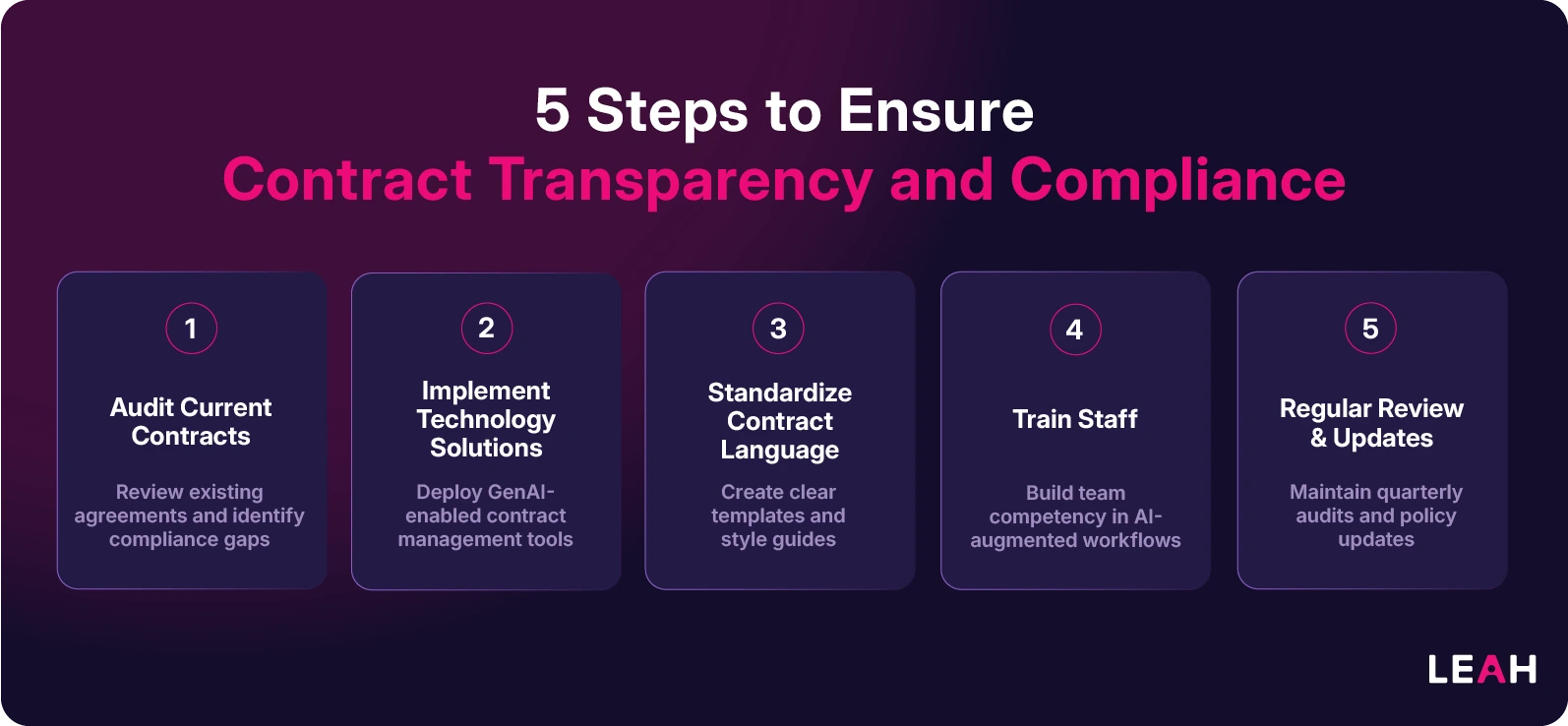
Transparency in contract management isn't just about compliance—it's about building and maintaining trust with customers and partners. When contracts are clear and comprehensible, businesses benefit from:
- Reduced risk of disputes and legal challenges through clearer terms and expectations
- Enhanced customer trust and loyalty driven by open communication
- Improved operational efficiency through better contract understanding
- Stronger partnerships based on mutual understanding and clear expectations
The car finance ruling serves as a powerful case study, demonstrating how lack of transparency can lead to significant legal and financial consequences while eroding customer trust.
Role of Technology in Ensuring Contract Compliance
Modern contract management demands sophisticated tools to maintain compliance and transparency. Traditional manual processes are no longer sufficient to handle the complexity of modern business relationships and regulatory requirements. Technology solutions offer:
- Automated clause management capabilities that ensure consistent transparency
- Real-time tracking systems for monitoring contractual obligations
- Enhanced visibility into commission structures and financial disclosures
- Streamlined processes for maintaining regulatory compliance
Proactively Addressing Potential Liabilities
Organizations must take proactive steps to audit their existing contracts and identify potential risks. This process includes:
- Conducting thorough reviews of existing contracts to identify non-disclosure risks
- Addressing ambiguous terms and clauses that could lead to disputes
- Ensuring clear documentation of commission structures and financial arrangements
Tools and Strategies for Proactive Risk Mitigation
In 2024, the Annual Law Department Operations Survey found that 28% of law departments leverage GenAI for due diligence processes. Modern AI-powered contract management solutions can significantly enhance risk mitigation efforts. For example, advanced AI systems can:
- Automate the extraction of crucial data points for risk assessment
- Identify areas of non-compliance and provide detailed alignment reports
- Perform comprehensive gap analysis by reviewing contracts against regulatory requirements
- Generate tailored recommendations for contract remediation
- Streamline the process of updating and standardizing contract language
Enhancing Customer Trust Through Better Contracts
Transparent contracts do more than just prevent legal issues—they actively build customer trust and satisfaction. To create more customer-centric contracts, organizations should:
- Use plain language that is easily understood by all parties
- Clearly highlight key terms and conditions upfront
- Provide detailed explanations of financial arrangements
- Ensure consistent formatting and organization of contract documents
Preparing for a More Transparent Future
The trend toward greater transparency in contracts is likely to continue across all industries. Organizations can prepare by:
- Staying informed about evolving regulatory requirements
- Implementing robust contract management systems
- Training staff on transparency best practices
- Regularly reviewing and updating contract templates
- Building a culture of openness and clarity in all business dealings
The Path Forward
The UK car finance ruling serves as a crucial reminder of the importance of transparent contract management. Organizations that embrace this opportunity to enhance their contract management practices will not only avoid potential legal issues but also build stronger, more trusted relationships with their customers and partners.
The path forward is clear: businesses must invest in the tools, processes, and practices that enable transparent contract management. By doing so, they protect themselves from legal risk while building the trust that drives long-term business success.
UK Car Finance Ruling FAQs
- What is the UK car finance ruling, and why is it significant?
The UK car finance ruling mandates full disclosure of commissions by dealers and brokers when arranging financing. It highlights the importance of transparency in contracts to build trust and avoid legal disputes.
- How does the ruling effect industries beyond automotive retail?
While directly impacting automotive finance, the ruling sets a precedent for other sectors by emphasizing the importance of transparency in financial dealings and customer relationships.
- What are the risks of not having transparent contracts?
Non-transparent contracts can lead to disputes, regulatory fines, loss of customer trust, and reputational damage.
- How can businesses improve transparency in their contracts?
Businesses can use plain language, disclose all key terms, clearly outline financial arrangements, and leverage technology to ensure compliance and tracking.
- What role does AI play in managing transparent contracts?
AI streamlines contract management by automating clause reviews, identifying risks, ensuring compliance, and simplifying disclosures.