
Quick answer: Yes, AI can extract data from contracts. It reads each agreement, including scanned copies, and turns parties, dates, fees, renewal and notice terms, obligations, and key clauses into structured fields, each linked to the clause it came from.
To automate contract data extraction, list the fields you need, run the AI on a sample of your own contracts, and have a person check low-confidence results and any value that drives money or deadlines before the data is used. The worked example below shows each step on a sample contract.
Executive Summary
AI-powered contract data extraction reduces manual review time by up to 50% and eliminates costly errors by automating the identification and capture of critical contract information. Legal teams spend over 30% of their time searching contracts at $300-500 per hour, making traditional processes unsustainable. Modern AI combines NLP, Machine Learning, and Generative AI to process thousands of contracts in seconds with human-like comprehension, transforming weeks-long due diligence into instant insights. Extraction works best with a defined field list and a human check on the values that drive money and deadlines. The benefits include faster portfolio reviews, more consistent data, reporting you can rely on, and earlier warning of renewals and risky terms across legal operations, procurement, finance, and compliance. With poor contract management costing up to 9% of annual revenue, AI extraction delivers significant improvements in efficiency, risk reduction, and strategic decision-making.
Legal teams spend over 30% of their time searching for information buried in contracts, according to research by World Commerce & Contracting. What if AI could give that time back?
Contracts contain the data that drives decisions, supports contract compliance, and protects your organization. Extracting that information by hand is slow, error-prone, and harder to sustain as contract volumes grow.
This guide explains how AI contract data extraction works, walks through a worked example, and shows you what to check before you rely on the results.
What Is Contract Data Extraction and Why It Matters
Contract data extraction is the process of identifying and capturing specific information from contracts, from basic metadata such as parties, contract type, dates, and values to complex clauses, obligations, and non-standard terms. Capturing the basic fields is often called contract metadata extraction; extracting clauses and obligations goes further, into what each party must do and when.
Extraction happens when signed contracts are stored and when older contracts are migrated, one step in the contract management process. For the full lifecycle, see what is contract lifecycle management (CLM)?
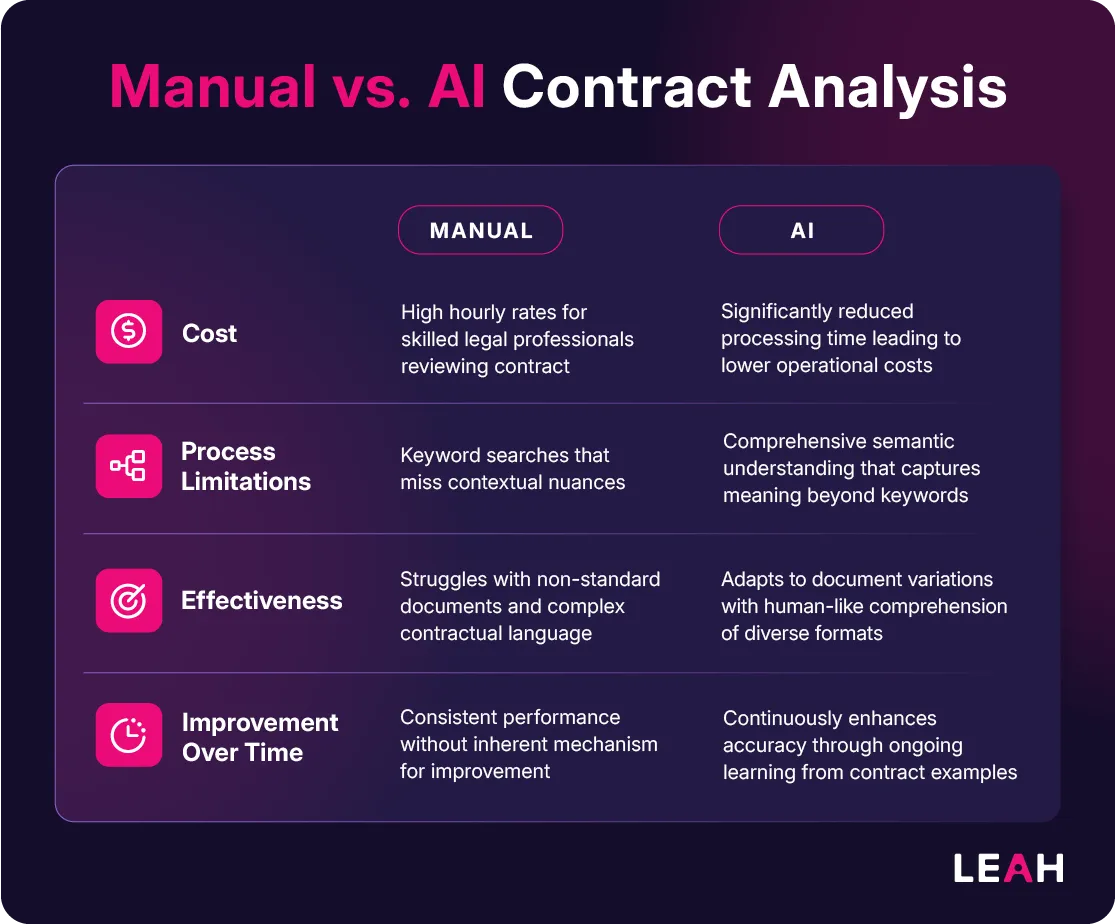
Traditional extraction methods struggle as volumes grow:
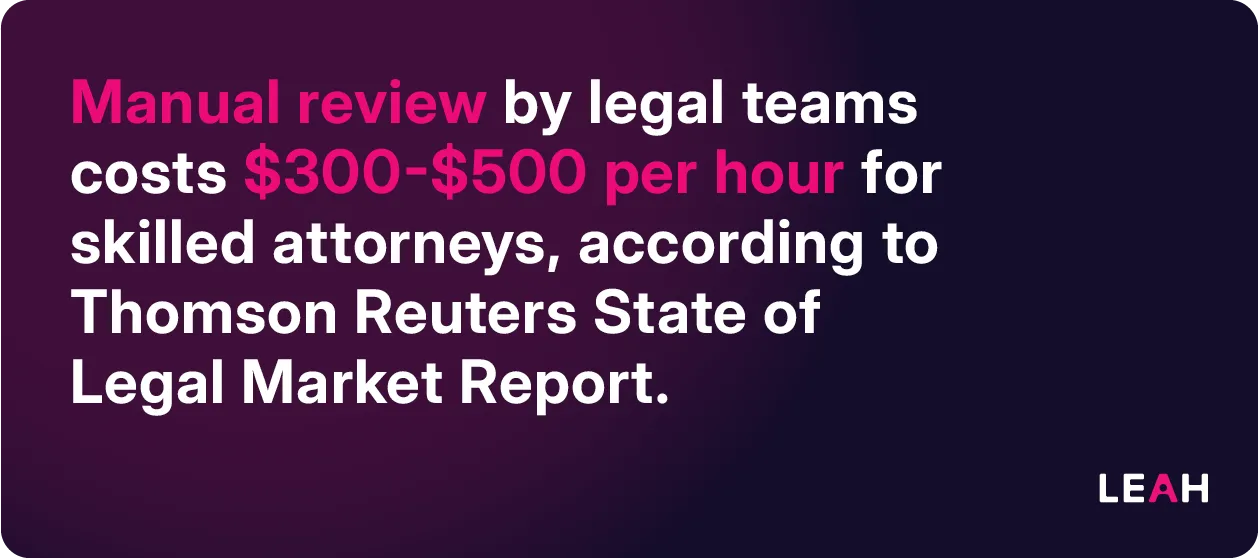
- Manual review by legal teams costs $300-500 per hour for skilled attorneys, according to Thomson Reuters' State of Legal Market Report
- Keyword searches miss contextual information and nuanced language
- Template-based solutions fail with non-standard documents or complex clauses
- Version control issues create risk when several stakeholders work on the same contract
The stakes are high. Missing a renewal date, overlooking a critical obligation, or misreading a clause can lead to financial penalties, compliance violations, or damaged business relationships.
Worked Example: Extracting Data from a Sample Contract
Here is what AI contract data extraction looks like on a short, fictional services agreement with one amendment. The clauses are simplified, but they include three details that cause real extraction errors: a deadline that has to be calculated, an amendment that changes the price, and a schedule that is referenced but not attached.
The Sample Clauses
1. Parties and Effective Date. This Master Services Agreement is made as of March 1, 2026 (the "Effective Date") between Example Supplier Ltd., a company registered in England and Wales ("Supplier"), and Example Customer Inc., a Delaware corporation ("Customer").
4.1 Fees. Customer shall pay Supplier an annual subscription fee of USD 120,000, invoiced annually in advance. Invoices are payable within forty-five (45) days of receipt.
4.3 Price Adjustment. On each anniversary of the Effective Date, Supplier may increase the fees by up to 3% on at least sixty (60) days' prior written notice.
9.1 Term and Renewal. The initial term is thirty-six (36) months from the Effective Date. This Agreement then renews automatically for successive twelve (12) month periods unless either party gives written notice of non-renewal at least ninety (90) days before the end of the then-current term.
11.2 Limitation of Liability. Except for breach of Section 12 (Confidentiality), each party's total liability under this Agreement shall not exceed the fees paid in the twelve (12) months before the claim.
14.4 Service Levels. Supplier shall make the Services available 99.5% of each calendar month. Service credits are set out in Schedule 2.
17. Governing Law. This Agreement is governed by the laws of the State of New York.
Amendment No. 1 (signed September 15, 2026). With effect from March 1, 2027, the annual subscription fee in Section 4.1 is USD 132,000. All other terms remain unchanged.
The Fields Extracted
The AI reads the agreement and the amendment together, fills in your field list, cites the source of each value, and marks which values need a person to confirm them.
| Field | Extracted value | Source | Review status |
|---|---|---|---|
| Contract type | Master services agreement, with one amendment | Title; Amendment No. 1 | Auto-accept |
| Parties | Example Supplier Ltd. (Supplier); Example Customer Inc. (Customer) | Clause 1 | Human check: match legal names to your supplier or customer record |
| Effective date | March 1, 2026 | Clause 1 | Auto-accept |
| Initial term end | February 28, 2029 | Clause 9.1 (calculated) | Human check: derived from "36 months," not stated |
| Renewal | Automatic, 12-month periods | Clause 9.1 | Auto-accept |
| Notice deadline | November 30, 2028 (non-renewal notice) | Clause 9.1 (calculated) | Human check: confirm the day count, then set a reminder well ahead |
| Annual fee | USD 120,000 until February 28, 2027; USD 132,000 from March 1, 2027 | Clause 4.1; Amendment No. 1 | Human check: confirm the amendment is signed and linked to this agreement |
| Payment terms | Billed annually in advance; due 45 days from receipt | Clause 4.1 | Auto-accept |
| Price increase | Up to 3% on each anniversary, with 60 days' written notice | Clause 4.3 | Auto-accept |
| Liability cap | Fees paid in the prior 12 months; confidentiality breaches excluded | Clause 11.2 | Human check: compare with your playbook position |
| Service level | 99.5% monthly availability; credits in Schedule 2 | Clause 14.4 | Human check: Schedule 2 not attached, so credits not extracted |
| Governing law | New York | Clause 17 | Auto-accept |
The Human Check Step
Before the data is published to your contract repository, a reviewer from legal or contract operations works through every "Human check" row:
- Open the source. For each flagged field, click through to the cited clause and confirm the value matches the text.
- Confirm calculated dates. Recalculate the term end and notice deadline, and agree how your team counts days. Set the renewal reminder well before November 30, 2028, so there is time to decide whether to renew.
- Resolve amendments. Confirm Amendment No. 1 is fully signed and that the current fee (USD 132,000 from March 1, 2027) replaces the original in reporting, while the original stays on record.
- Chase what is missing. Schedule 2 is referenced but not attached, so request it and note the gap rather than leaving service credits blank.
- Compare with your playbook. Send the liability cap to legal if it differs from your standard position.
- Assign owners. Give each obligation, such as the non-renewal decision and the monthly service-level review, a named owner and a reminder.
Fields marked "Auto-accept" still get a periodic spot check. Record the corrections made at this stage, because they show which fields need clearer rules or more training.
What the Example Shows
- Stated values are the easy part. The effective date, payment terms, and governing law are written out, so extraction is straightforward.
- Calculated values need a person. The term end date and notice deadline appear nowhere in the text; they are derived from it. Miss the notice window here and the agreement renews for another 12 months.
- The current value can live in another document. Amendments, addendums, and order forms change the parent agreement, so extraction has to link them and report the latest value.
- Gaps should be visible. A missing schedule is a finding, not an empty field.
Once checked, the dates and obligations can feed contract renewal management and obligation tracking, so they trigger reminders instead of sitting in a spreadsheet.
The Role of AI in Automating Contract Data Extraction
Modern AI-powered extraction combines several technologies to read contracts in context and at scale:
Natural Language Processing (NLP) enables systems to understand meaning and context beyond simple keyword matching. This is crucial for legal language, where minor variations in wording can have major implications. It also changes contract search: a keyword search for "termination for convenience" misses a clause that says "either party may end this Agreement without cause," while a search based on meaning finds both.
Machine Learning (ML) models learn from domain-specific contract examples. Tuning them on your contract types, and feeding back reviewer corrections, can improve extraction accuracy on the documents you see most.
Named Entity Recognition (NER) identifies and classifies key elements within contracts, such as parties, dates, locations, monetary values, and specific clause types.
Optical Character Recognition (OCR) converts scanned documents or PDFs into machine-readable text, essential for digitizing legacy contracts.
Generative AI uses large language models to interpret complex contract language, recognize patterns, and extract meaningful information from varied contract formats and structures.
Agentic AI carries extraction into the next step. It can prioritize important clauses, flag risks or inconsistencies, and start follow-up work, such as a renewal task or a review request, within the permissions and approval steps you set.
The strongest solutions combine these technologies, so they can handle varied document formats and still link every extracted value to its source text.
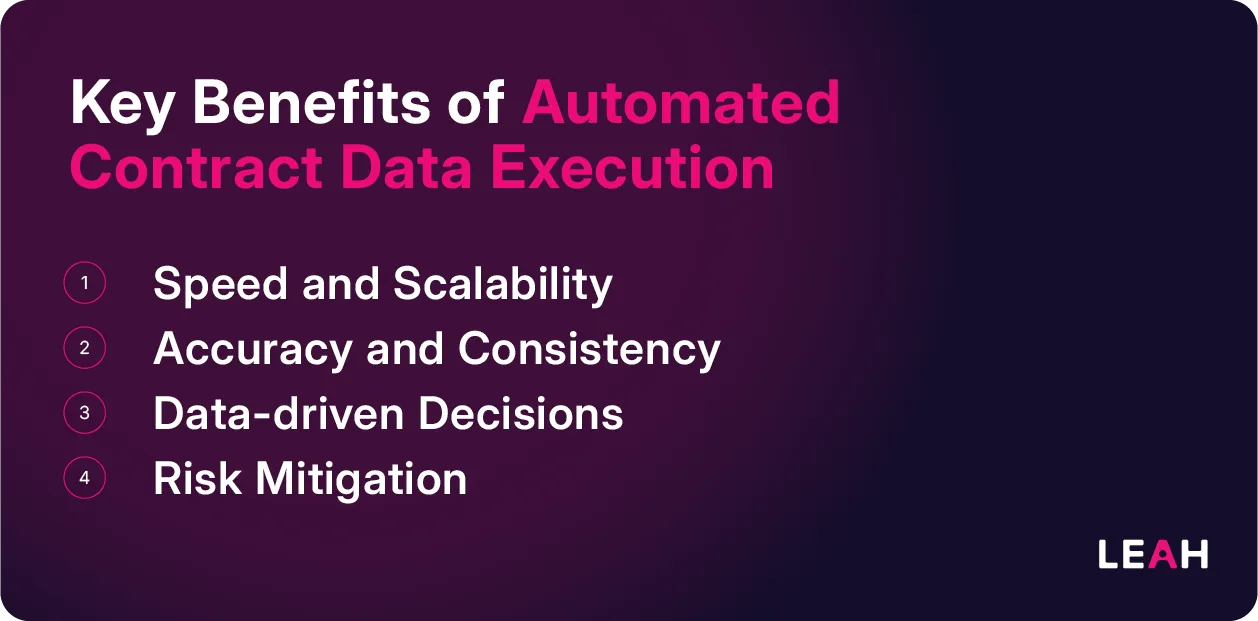
Key Benefits of Automated Contract Data Extraction
Speed & Scalability
AI systems can analyze contracts in seconds rather than hours, processing thousands of documents across multiple regions without fatigue or delay. That turns projects like due diligence or regulatory compliance reviews from long manual efforts into focused reviews of the exceptions.
For example, during M&A activities, legal teams can quickly assess hundreds of contracts to identify risks, obligations, and opportunities that might otherwise stay hidden until problems emerge. Research by Deloitte shows that ineffective due diligence is among the top factors in failed acquisitions.
Accuracy & Consistency
Humans make errors, especially during repetitive tasks or when reviewing long, complex documents. AI applies the same extraction rules to the first contract and the thousandth, and it flags the results it is unsure about.
This consistency creates a reliable foundation for decisions. When extraction is accurate and checked, downstream processes like obligation management, compliance monitoring, and renewal tracking become more dependable.
Data-Driven Decisions
Structured contract data supports analytics and reporting that manual processes can't:
- Compare terms across hundreds of vendor agreements to identify negotiation opportunities
- Analyze language variations to standardize clause libraries
- Track compliance with corporate policies across the contract portfolio
- Identify risk patterns within specific contract types or business units
Research from World Commerce & Contracting shows that poor contract management can cost organizations up to 9% of their annual revenue in value leakage.
This shift from document-centric to data-centric contract management supports strategic decisions, not just tactical reviews.
Risk Mitigation
Proactive identification of problematic clauses, missed obligations, or unfavorable terms reduces organizational risk. AI systems can flag issues like:
- Non-standard indemnification clauses
- Missing data protection provisions
- Unfavorable termination terms
- Auto-renewal periods
- Obligations without clear ownership
This early warning helps prevent costly oversights that often go unnoticed until problems arise.
Common Use Cases Across Industries
Legal Operations
Legal teams use automated extraction across the contract lifecycle:
- Self-service contract creation with guardrails based on approved terms
- Faster review cycles with automatic flagging of problematic clauses
- Obligation tracking with automated assignment and deadline monitoring
- Litigation preparation through rapid evidence gathering across contract repositories
Procurement
For procurement teams, extraction tools give clearer visibility into supplier agreements:
- Compare vendor terms across categories to identify negotiation opportunities
- Track performance obligations against SLAs
- Monitor pricing adjustments, volume discounts, and rebate thresholds
- Identify consolidation opportunities across similar suppliers
Financial Services
Banks and financial institutions handle complex regulatory requirements that demand precise contract intelligence:
- Find interest-rate benchmark and fallback provisions across agreements, including legacy references to LIBOR
- Monitor counterparty risks through automated covenant tracking
- Standardize terms across client agreements for consistent enforcement
- Extract financial obligations for accurate revenue recognition and forecasting
Healthcare
Healthcare organizations balance patient care with complex compliance requirements:
- Monitor business associate agreements (BAAs) for HIPAA compliance
- Track insurance contract terms and reimbursement schedules
- Manage vendor relationships for critical supply chains
- Ensure consistent language in patient consent forms
Why Generic Tools Fail: Pitfalls of Off-the-Shelf Solutions
Many organizations attempt contract extraction with general-purpose OCR tools or basic AI solutions, then find these approaches miss the particular challenges of legal documents:
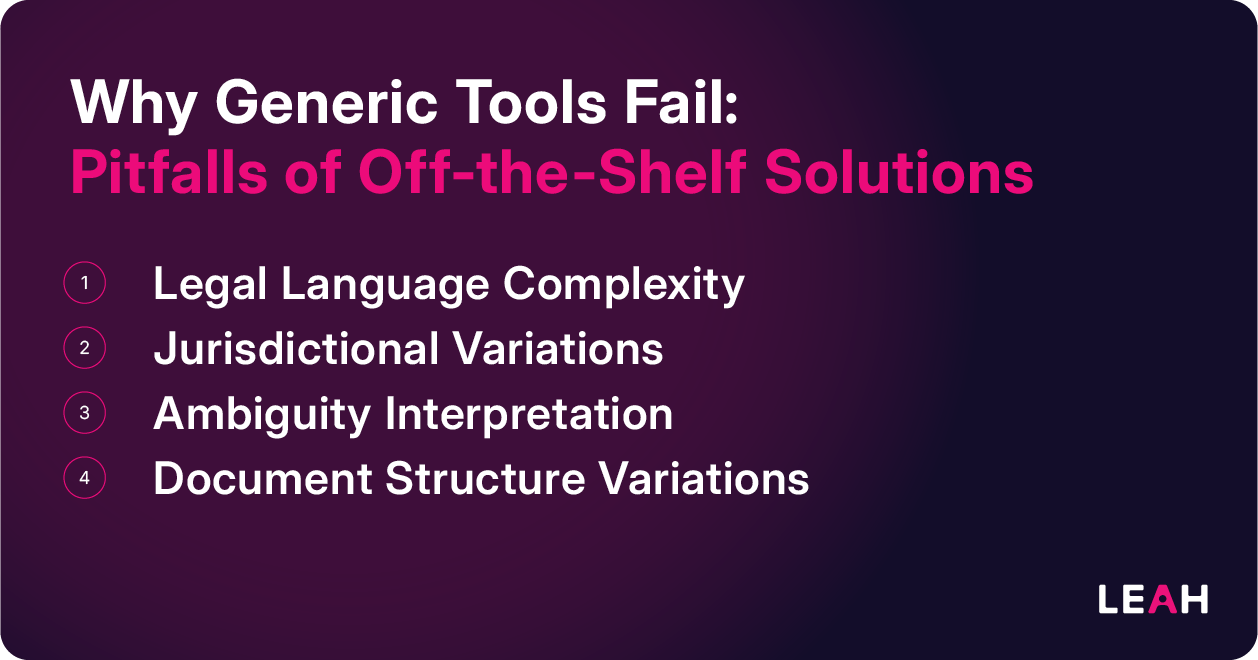
Legal language complexity requires specialized training. Generic systems struggle with concepts like "materiality," "reasonable efforts," or conditionally triggered obligations.
Jurisdictional variations mean the same concept may be expressed differently across regions. What works for U.S. contracts often fails with UK or EU agreements.
Ambiguity interpretation requires legal expertise built into the AI. Understanding whether language is intentionally or unintentionally vague is crucial for proper extraction.
Document structure variations confuse template-based systems. When every counterparty has its own contract format, rigid extraction rules quickly break down.
The result is poor extraction quality, manual verification that cancels out the efficiency gains, and stalled digital transformation projects.
How Leah Extracts Contract Data with AI
Leah (formerly ContractPodAi) builds extraction into Leah Agentic CLM, where AI drafts, reviews, routes, and tracks contracts while your team approves the decisions that matter. With One-Drop, you drop in any counterparty document, and Leah classifies the contract type, extracts key clauses, obligations, and parties, and starts the right workflow. Renewal dates, notice periods, and milestones then trigger reminders, and integrations with systems such as Salesforce, SAP, Coupa, and Workday carry the data to the teams that use it.
Our Leah Intelligence™ platform:
- Understands legal contexts through specialized training on hundreds of thousands of legal documents across jurisdictions and industries
What to Look for in an AI-Powered Contract Extraction Tool
When evaluating solutions for contract data extraction, consider these capabilities. If you are also choosing a tool for broader review work, see our guide to the best AI for document review.
Domain-Specific Training
The AI should be trained on legal documents, not just general business content, so it can analyze complex contracts and extract the information that matters to your organization. Ask vendors about their training data and legal expertise.
Customization Capabilities
Every organization has unique extraction needs, including company-specific and industry-specific rules that standard frameworks don't cover. You should be able to define custom fields and extraction rules without data science expertise.
Security & Compliance
Contract data is sensitive. Make sure the solution meets enterprise security standards (for example, SOC 2 and GDPR) and keeps audit trails for all extraction activity. Our guide to AI contract management data security lists the questions to ask.
Validation Workflows
No AI is perfect. The best systems show a confidence level for each value, link it to the source clause, and route exceptions to the right expert, as in the human check step above.
Integration Flexibility
Extracted data must flow to where it's needed. Look for pre-built connectors to your CRM, ERP, procurement, and e-signature systems, plus well-documented APIs for custom integrations.
Continuous Improvement
The system should learn from corrections and feedback, becoming more accurate with your document types over time. Ask vendors how corrections are used and whether your data trains any shared model.
Scalability
As your contract volume grows, the solution should handle the increased load without slowing down. Ask how pricing changes with volume so growth does not bring surprise costs.
Visual Insights
Advanced extraction tools turn findings into charts and visuals that reveal patterns that are hard to see in text alone. This helps with pattern recognition and decision-making.
Natural Language Interface
Modern contract extraction tools let users ask questions in plain language, such as "Which supplier contracts renew next quarter?", and get answers linked to the clauses they came from.
The Future of Contract Intelligence: Beyond Extraction
Extraction is the foundation, but contract intelligence extends well beyond pulling data from documents:
- Predictive analytics will identify negotiation opportunities and risks before they become problems, using historical patterns to forecast outcomes
- Obligation automation will connect contract terms directly to workflow systems, automatically triggering actions when obligations become due
- Real-time risk monitoring will continuously assess contract portfolios against changing regulations, business conditions, and corporate policies
- Cross-contract intelligence will identify relationships between agreements that are hard to spot manually, revealing hidden risks and opportunities
According to research from Gartner cited by Bloomberg Law, AI-based contract analytics solutions can reduce the manual effort needed for contract review by 50%.
Organizations that build strong extraction capabilities now will be ready to use these applications as the technology develops.
Taking the Next Step with Automated Contract Data Extraction
Automating contract data extraction is not only about efficiency. It changes how legal and business teams use contract information to make decisions and reduce risk.
A measured approach works best:
- Start with a defined use case (for example, vendor contract analysis or regulatory compliance)
- Select a solution with legal-specific AI capabilities
- Measure results against clear KPIs (time saved, accuracy improvements, risk reduction)
- Expand to additional contract types and use cases
To see extraction run on your own contracts, request a personalized demo.
FAQ
Can AI extract data from contracts?
Yes. AI can read contracts, including scanned ones after OCR, and extract parties, dates, fees, renewal and notice terms, obligations, governing law, and key clauses into structured fields. The same approach works for term sheets, amendments, and order forms, and for companies of any size, whether you hold a few hundred contracts or a large portfolio. What matters most is a clear field list and a human check on the values that drive money or deadlines.
How can legal teams automate contract data extraction?
Start with one contract type and a written list of the fields you need, then run a pilot on a sample of your own signed contracts. Use a tool trained on legal documents, with OCR for scans, confidence scores, and a human check for low-confidence or high-impact fields. Once accuracy meets your threshold, connect the output to your contract repository, CLM, and ERP so dates trigger reminders and data feeds reporting, then expand to the next contract type.
How does AI improve accuracy when extracting data from contract documents?
AI improves accuracy by reading clauses in context rather than matching keywords, applying the same rules to every contract, and flagging low-confidence results for human review. Accuracy improves further when the model is trained or tuned on contract language from your jurisdictions and contract types, and when reviewer corrections feed back into the system. Across a large portfolio, measure it: test the tool against a sample your experts have already reviewed and track misses and false positives by field.
Can AI extract obligations and deadlines from contracts, and how reliable is it?
Yes. AI is most reliable on obligations and dates that are stated outright, such as "payable within 45 days," and least reliable on dates it has to calculate, such as a notice deadline "90 days before the end of the then-current term," or obligations triggered by events. Have a person confirm calculated and event-based items before reminders are set. Once confirmed, each obligation should have a named owner and a reminder, not just a field in a spreadsheet.
How do I use AI to extract revenue data from contracts?
Define the revenue fields you need, such as fees, billing frequency, payment terms, price escalators, discounts, minimum commitments, start and end dates, and renewal terms, then have the AI extract each one with a link to its source clause. Route anything that affects revenue recognition, such as variable fees, termination for convenience, or amendments that change pricing, to finance for review before the data reaches your ERP or billing system. Treat the AI output as input to the accounting judgment, not the judgment itself.
What AI tools can extract information from contracts to help with contract addendums?
Contract extraction tools and CLM platforms with built-in AI can pull the current terms from a master agreement and its amendments, so an addendum references the right clauses and values. Look for a tool that links each amendment to its parent agreement, shows the current value of each field alongside the original, and cites the clause behind every value. In Leah, One-Drop classifies an uploaded counterparty document, extracts key clauses, obligations, and parties, and starts the right workflow.