
Quick answer: The main benefits of AI in legal operations and contract review are speed on high-volume reading work, more consistent first-pass review against your own standards, faster intake triage, and fewer missed obligations and deadlines. For corporate legal teams, that means quicker turnaround for the business and more lawyer time for advice, negotiation, and judgment calls.
Those benefits hold only when a lawyer stays in the loop. AI can misread a clause or invent a citation, and duties such as competence, confidentiality, and supervision still apply, so treat AI output as a draft to check, not a decision.
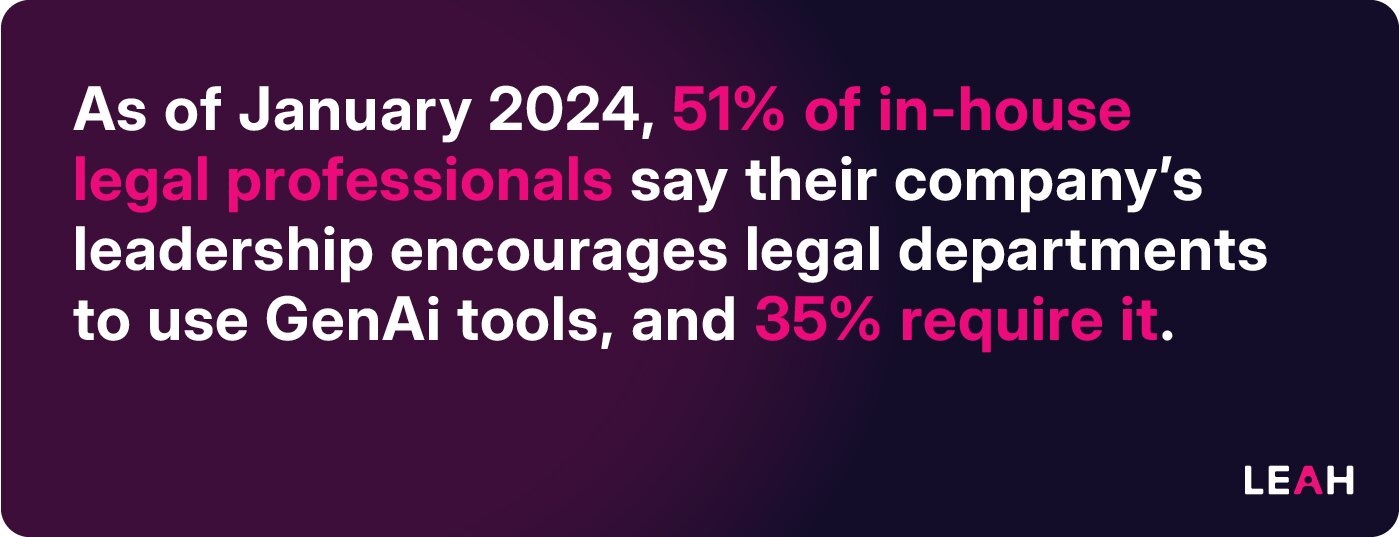
AI is now part of everyday legal work, from contract review and legal research to intake and compliance. According to a 2023 Goldman Sachs report, two-thirds of U.S. occupations are exposed to some degree of automation by AI. In fact, a recent study conducted by Leah found that as of January 2024, more than half of in-house legal professionals (51%) say their company’s leadership encourages legal departments to use GenAI tools, and more than a third (35%) require it. This article explains how corporate legal departments use AI on routine and complex matters to work faster, manage risk, make better-informed decisions, and serve the business, and where human judgment has to stay in charge.
Artificial Intelligence in Corporate Legal Departments
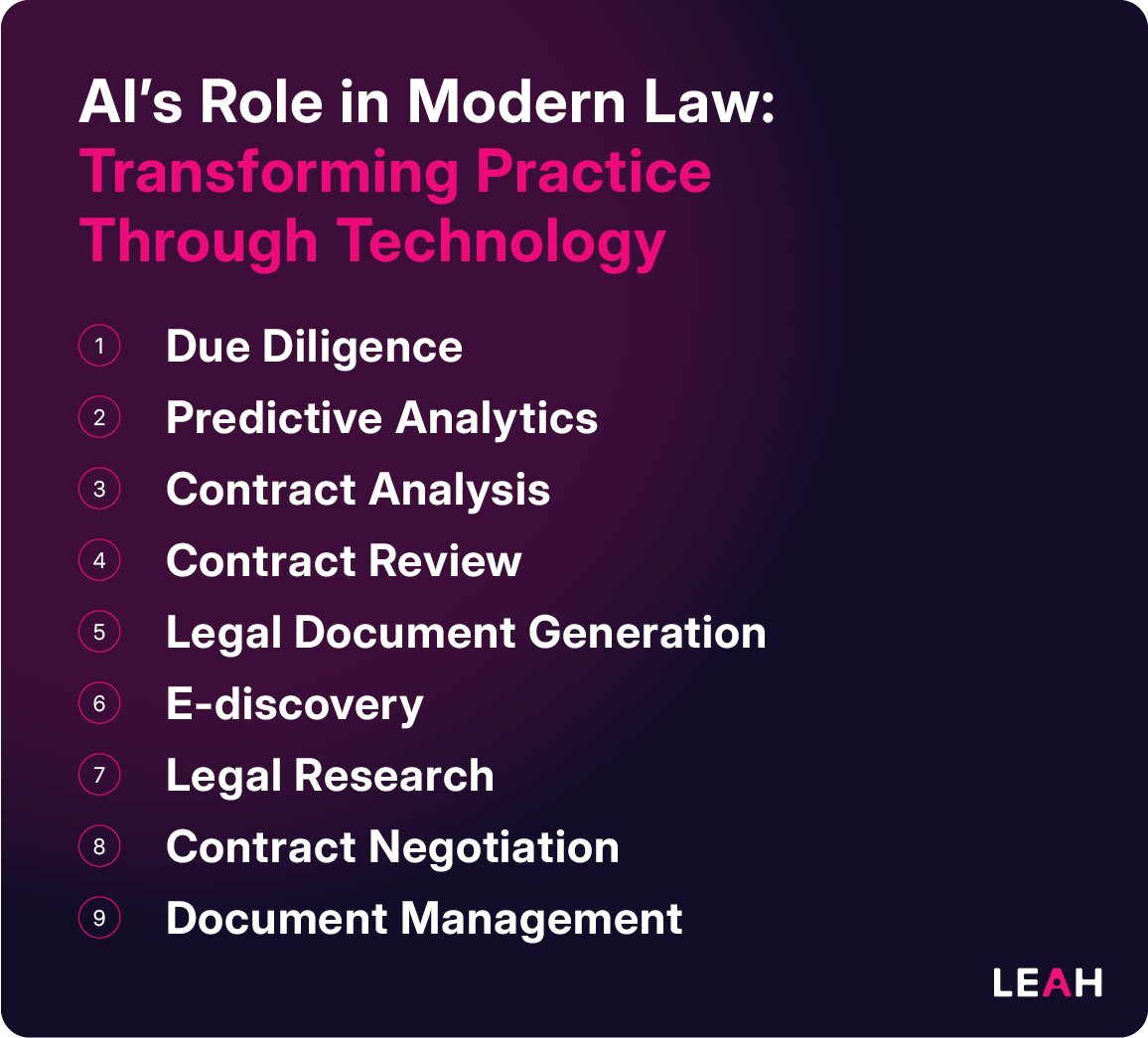
Like every part of an organization, legal departments are asked to show value while controlling costs. AI changes how legal services are delivered by automating repetitive tasks, organizing and locating documents, processing large volumes of information, and speeding up contract review. Modern AI systems do more than follow fixed rules, and many improve with human review and feedback, which helps legal professionals make better-informed decisions. AI does not replace a lawyer's judgment, but it can take on much of the reading, sorting, and first drafting that fills a legal team's week. AI tools are already used in several areas of legal practice, including:
- Contract review, redlining, and drafting
- Legal research and summarization
- Due diligence and document review
- Legal intake and triage
- Compliance monitoring and obligation tracking
- E-discovery and litigation support
Where AI helps in legal work, and where a lawyer stays in the loop
The table below maps common legal tasks to the benefit AI brings, the risk you need to manage, and the point where a lawyer must review or decide. Use it to set rules before you roll out a tool, not after.
| Legal task | What AI does | Benefit | Risk to manage | Where a lawyer stays in the loop |
|---|---|---|---|---|
| Contract review | Compares counterparty paper with your playbook, flags missing or non-standard clauses, and suggests redlines. | Faster first pass and more consistent positions across reviewers. | Missed context, such as side letters or prior deals, and suggested wording that does not fit the deal. | Approves every redline and any deviation from the playbook, and owns the negotiation. |
| Legal research | Finds and summarizes statutes, cases, regulations, and guidance, and ranks them by relevance. | Faster orientation on a new question. | Invented or misquoted citations and outdated law. | Reads the primary sources and verifies every citation before relying on it. |
| Intake triage | Classifies requests, asks for missing details, and routes work to the right person or to self-service. | Quicker responses and fewer back-and-forth emails. | Urgent or sensitive matters routed to the wrong place. | Sets the routing rules and reviews escalations and anything flagged as high risk. |
| Due diligence | Sorts and reviews large document sets for change of control, assignment, exclusivity, and other flags. | More documents covered in the time available. | Missed issues in poor scans or unusual drafting. | Samples the "no issue" pile, reviews every flagged item, and signs off on findings. |
| Obligation tracking | Extracts dates, notice periods, and obligations from signed contracts and sets reminders. | Fewer missed renewals, notice deadlines, and commitments. | Wrong extracted dates and obligations buried in amendments. | Verifies high-impact dates against the clause and decides whether to renew, renegotiate, or terminate. |
| Drafting | Produces first drafts from templates, clause libraries, and instructions. | Quicker first drafts and approved language reused. | Non-standard terms slipping in, and confidential data entered into tools without adequate protections. | Reviews and edits before anything reaches a counterparty, and chooses which tools may handle client data. |
| Compliance monitoring | Tracks regulatory updates and maps them to affected policies or contracts. | Earlier awareness of changes that affect the business. | Missed or misread changes, and too many low-value alerts. | Interprets each change and decides the response. |
A simple rule follows from the table: the more an AI output changes a legal position, commits the company, or leaves the legal team, the more review it needs. Bar guidance takes the same view. The State Bar of California's practical guidance on generative AI, updated in May 2026 to cover agentic AI, states that an attorney "remains fully responsible for any outputs and work product generated with the assistance of AI." For intake, see the stages of an effective legal intake process, and for a fuller view of AI across the contract lifecycle, see AI contract management.
The Benefits of AI in Law
Legal professionals say their teams have been proactive about issuing guidance on when, how, or if to use GenAI tools for legal work. A significant majority of respondents (85%) say their company’s legal department has established guidelines, best practices, or operating procedures for using GenAI tools.
Here are seven benefits corporate legal teams can expect, each with the condition that makes it real.
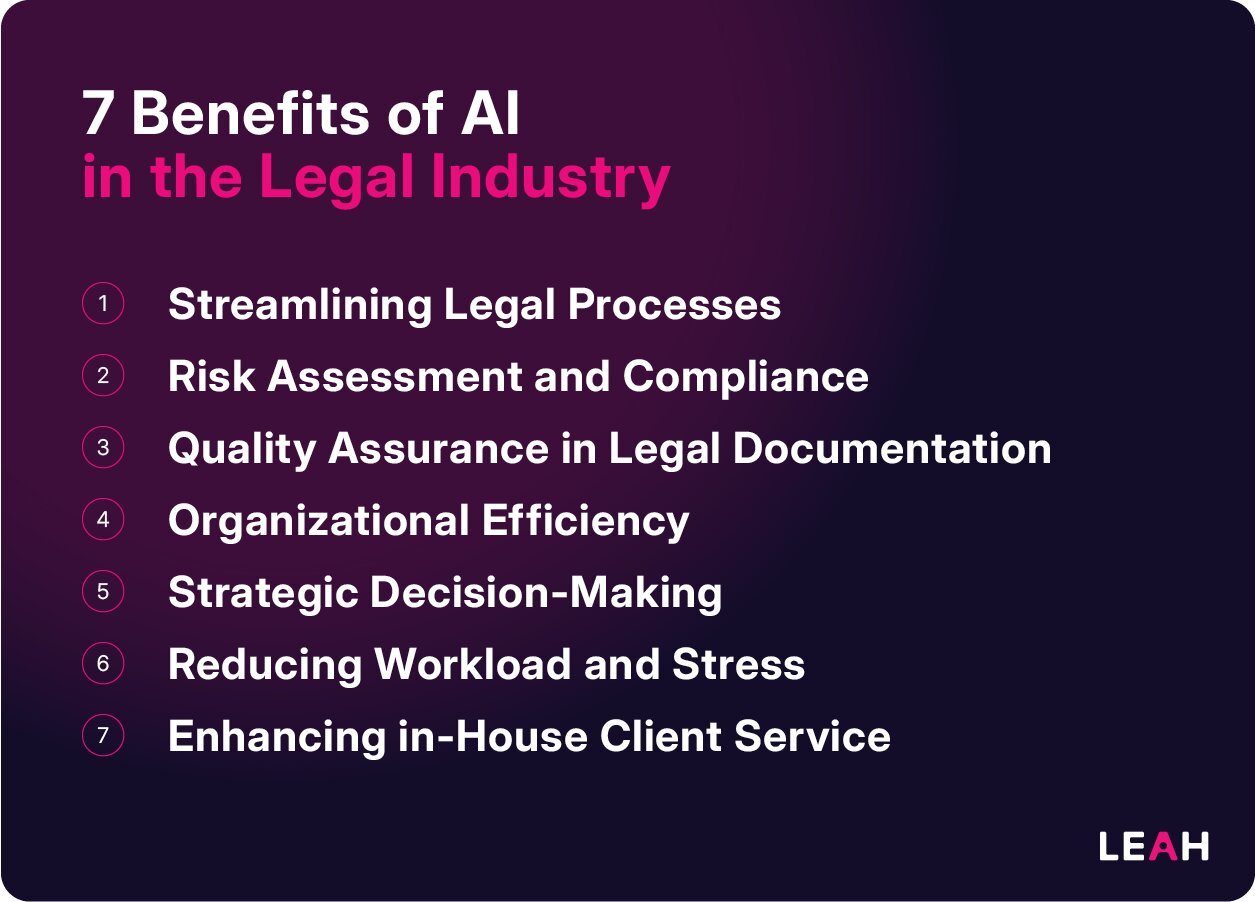
1. Streamlining Legal Processes
A lawyer's time is valuable and expensive, so saving time while staying accurate and compliant benefits both the attorney and the client. Start by mapping your workflows to find tasks that take a long time, invite human error, or follow a repeatable pattern, then introduce AI there. AI can speed up document review, proofreading, and legal research by working through large sets of documents, recognizing patterns in language, and flagging key information, mistakes, and inconsistencies. That leaves attorneys more time to advise and counsel. It also reduces the error and fatigue that come with long stretches of routine reading, provided someone checks the output before it is relied on.
2. Risk Assessment and Compliance
Regulation and corporate governance change constantly, which creates legal and compliance complexity. AI tools can monitor regulatory updates, map them to the parts of the business they may affect, and alert the legal team so it can adjust early. In due diligence and contract portfolios, AI can review large volumes of documents and surface risks, such as unusual liability terms or missing clauses, for a lawyer to assess. If you need a structure for governing the AI tools themselves, the NIST AI Risk Management Framework (AI RMF 1.0, released in January 2023, with a Generative AI Profile added in July 2024) is a voluntary framework for managing AI risk.
3. Quality Assurance in Legal Documentation
AI is useful for quality assurance and legal review because it can read and summarize documents and point out discrepancies or inaccurate data. It can locate specific clauses, potential risks, or obligations across many documents in far less time than a manual read. Used with a clear playbook, it makes document review more thorough and consistent and gives attorneys a faster starting point. To compare tools for this work, see our guide to AI document review software.
4. Organizational Efficiency
Legal research is one of the most time-consuming tasks legal professionals face, and AI is increasingly built into the research tools lawyers already use. AI research tools can locate and analyze information from many sources, including statutes, case law, regulations, and articles, and rank results by relevance. They can extract key points, summarize each document, or compare documents on specified issues, which helps lawyers reach a view faster. The risk is fabricated or misquoted authority, so every citation must be checked against the source. For why purpose-built tools differ from general chatbots, see legal AI vs ChatGPT.
5. Strategic Decision-Making
Human judgment and expertise will always be needed in legal practice. However capable an AI tool is, the legal profession relies on people to uphold ethical standards, weigh business context, and make strategic calls. What AI adds is data: it can review contracts and matters and report on trends, such as which clauses are negotiated most often or where disputes tend to arise, so general counsel can make better-informed decisions. It can also analyze matter history and outside counsel spend to support decisions about which firm to use. The decision stays with the lawyer; AI does the upfront analysis.
6. Reducing Workload and Stress
AI can take on redundant, time-consuming work such as administrative tasks, first drafts, and document analysis, so legal professionals can spend more time on higher-value work that uses their training. Teams that get through routine work faster also face less pressure from tight deadlines.
AI legal workflow automation can handle many of the repetitive duties that keep attorneys at the office late and contribute to burnout. Freeing up time and attention supports a healthier work-life balance without lowering the quality of the work. Organizations that take lawyers' well-being seriously are also better placed to keep good people.
7. Enhancing In-House Client Service
When lawyers spend their days working through documents and data, calls and emails wait and internal clients feel overlooked. AI lets in-house lawyers spend less time on routine tasks and more on advising the business. That means faster responses, more consistent communication, and more time for strategic discussion with colleagues. Self-service intake and contract questions answered from the source document can also resolve simple requests without a meeting, so the business gets answers sooner and lawyers can focus on the matters that need them.
Conclusion
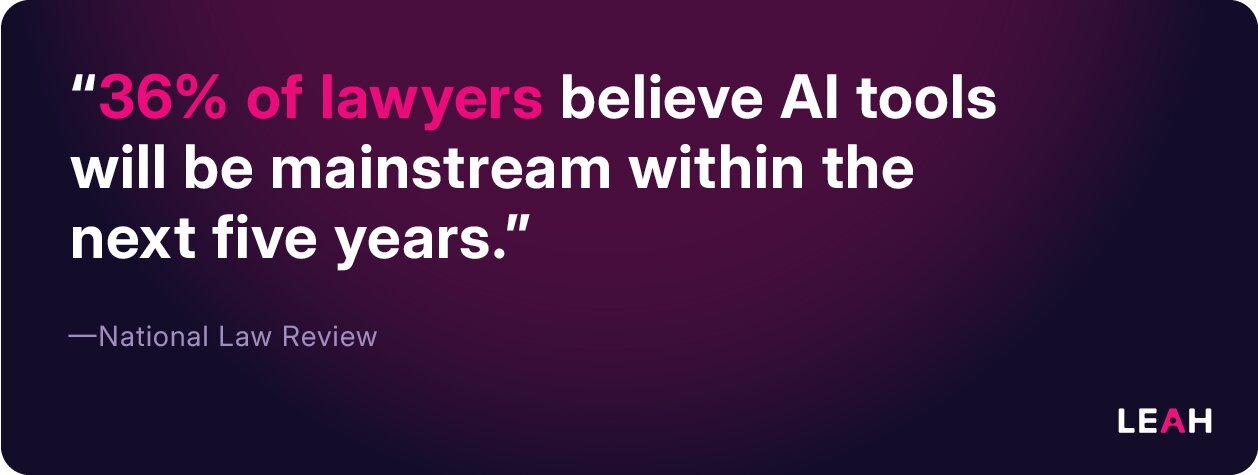
As corporate legal teams use AI more widely, they keep finding ways it helps with both daily and long-term work: faster review, earlier sight of risk, better-informed decisions, lighter workloads, and better service to the business. In fact, Mordor Intelligence found that the AI Software Market in Legal Industry is expected to grow from USD 2.19 billion in 2024 to USD 3.64 billion by 2029. AI is now part of research, analytics, due diligence, compliance, and contract management inside corporate legal departments. Will AI replace lawyers? No. It helps them do their jobs faster and with better information, while the judgment, and the responsibility, stay with them.

How Leah applies AI to legal and contract work
Leah, formerly ContractPodAi, builds AI for this kind of work. In Leah Agentic CLM, AI drafts, reviews, routes, and tracks contracts while your team approves the decisions that matter. That includes playbook-driven review and redlining (in Microsoft Word through the Leah Word Add-in, with redlines returned as tracked changes), One-Drop classification and clause extraction, and renewal and obligation alerts. Request a demo to see it with your own contracts.
FAQ
What are the benefits of AI in legal operations?
AI speeds up the high-volume work that fills legal operations: intake triage, first-pass contract review, document review, and tracking renewals and obligations. That shortens turnaround for the business, makes review more consistent across the team, and gives lawyers more time for advice and negotiation. The gains depend on clear playbooks, good data, and a lawyer approving the decisions that matter.
What are the benefits of AI in legal and contract review?
In contract review, AI compares a contract with your playbook, flags missing or non-standard clauses, and suggests redlines, so reviewers start from a marked-up draft instead of a blank read. The result is a faster first pass and more consistent positions across reviewers. A lawyer still approves every redline and any deviation from the playbook.
What are the benefits of using AI in legal services for corporate clients?
Corporate clients get faster answers, quicker contract turnaround, and more consistent advice, because routine reading and drafting take less lawyer time. Self-service intake and contract Q&A can resolve simple requests without a meeting. The client should still know who is giving the legal advice and how important decisions are made.
What are the risks of AI in legal work?
The main risks are inaccurate output (including invented citations), exposing confidential information to tools without adequate protections, and over-reliance on confident-sounding answers. Manage them by choosing approved tools, limiting the data those tools can reach, and having a lawyer verify output before it is relied on or sent outside the team. Professional responsibility stays with the lawyer.
How does AI improve legal research?
AI research tools find relevant statutes, cases, and guidance faster, summarize them, and rank them by relevance, which shortens the time it takes to get oriented on a new question. They do not replace reading the authorities. Every citation must be checked against the primary source before you rely on it.
Will AI replace lawyers?
No. AI takes on reading, sorting, and first drafts, but legal judgment, negotiation, ethics, and accountability stay with lawyers. The State Bar of California's guidance, for example, says an attorney's professional judgment cannot be delegated to AI. What changes is how lawyers spend their time: less on routine review and more on advice.